


 Abstract
 HTML
HTML Reference
 Related
 PDF
PDF




-
Zirconium metal and its alloys are widely used in national defense, aerospace, atomic energy, and other fields owing to their excellent physical and chemical properties. Accurate nuclear reaction cross sections on zirconium isotopes around 14 MeV neutrons are crucial for the development of nuclear weapons, development and utilization of nuclear energy, application of nuclear technology, etc. Therefore, these cross sections of (n,2n), (n,α), (n,p), (n,d), and (n,γ) reactions on zirconium isotopes around 14 MeV neutrons have been studied by numerous researchers worldwide and can be found in the experimental nuclear reaction data (EXFOR) library [1]. However, the cross section of the94Zr(n,d*)93m+gY [d*=d+(n+p), similarly hereinafter] reaction has been measured by only two groups at single neutron energies of 14.7 MeV or 14.1 MeV, and there is a large difference between the two values obtained, which are 2.43 ± 0.21 mb [2] and 0.8 ± 0.1 mb [3], respectively. For the96Zr(n,γ)97Zr reaction, the cross section has been measured by more than 20 groups [1]; however, three of them were induced by neutrons through the D-T reaction [4-6], and there are significant differences in those data, the maximum difference between them being more than a factor of 30. Thus, it is necessary to measure them again and provide their excitation functions. In this work, the cross sections of the94Zr(n,d*)93m+gY and96Zr(n,γ)97Zr reactions have been measured in the neutron energy range of 13.5-14.8 MeV via the activation technique. At the same time, combined with the theoretical models of nuclear reactions, the computations of the excitation functions of the above-mentioned two nuclear reactions were conducted by adopting the nuclear theoretical model program system Talys-1.9 [7]. Their excitation curves were acquired in the neutron energy range from the threshold to 20 MeV. In addition, the cross sections of the96Zr(n,2n)95Zr,90Zr(n,α)87mSr,94Zr(n,α)91Sr,90Zr(n,p)90mY,92Zr(n,p)92Y, and94Zr(n,p)94Y reactions of ~14 MeV neutrons were measured, and their excitation curves in the neutron energy range from the threshold to 20 MeV were acquired. The cross sections obtained are compared with earlier experiments by other researchers and with the theoretical results obtained by Talys-1.9.
-
Natural zirconium foils (purity: 99.99%, thickness: 3.04-3.09 mm) were formed into round disks with a diameter of 20 mm. Four such round disks were prepared. Niobium monitor foils (purity: 99.95%, thickness: 0.62 mm) of the same diameter as the zirconium sample were subsequently fixed at the front and back of each zirconium sample, which was wrapped in a cadmium foil (purity: 99.95%, thickness: 1 mm) to reduce the influence of the94Zr(n,γ)95Zr reaction induced by low-energy neutrons on96Zr(n,2n)95Zr reactions.
The samples were irradiated at the K-400 Neutron Generator at China Academy of Engineering Physics (CAEP) for 6.2-7.5 h. Neutrons around 14 MeV with an yield of about (4-5)×1010
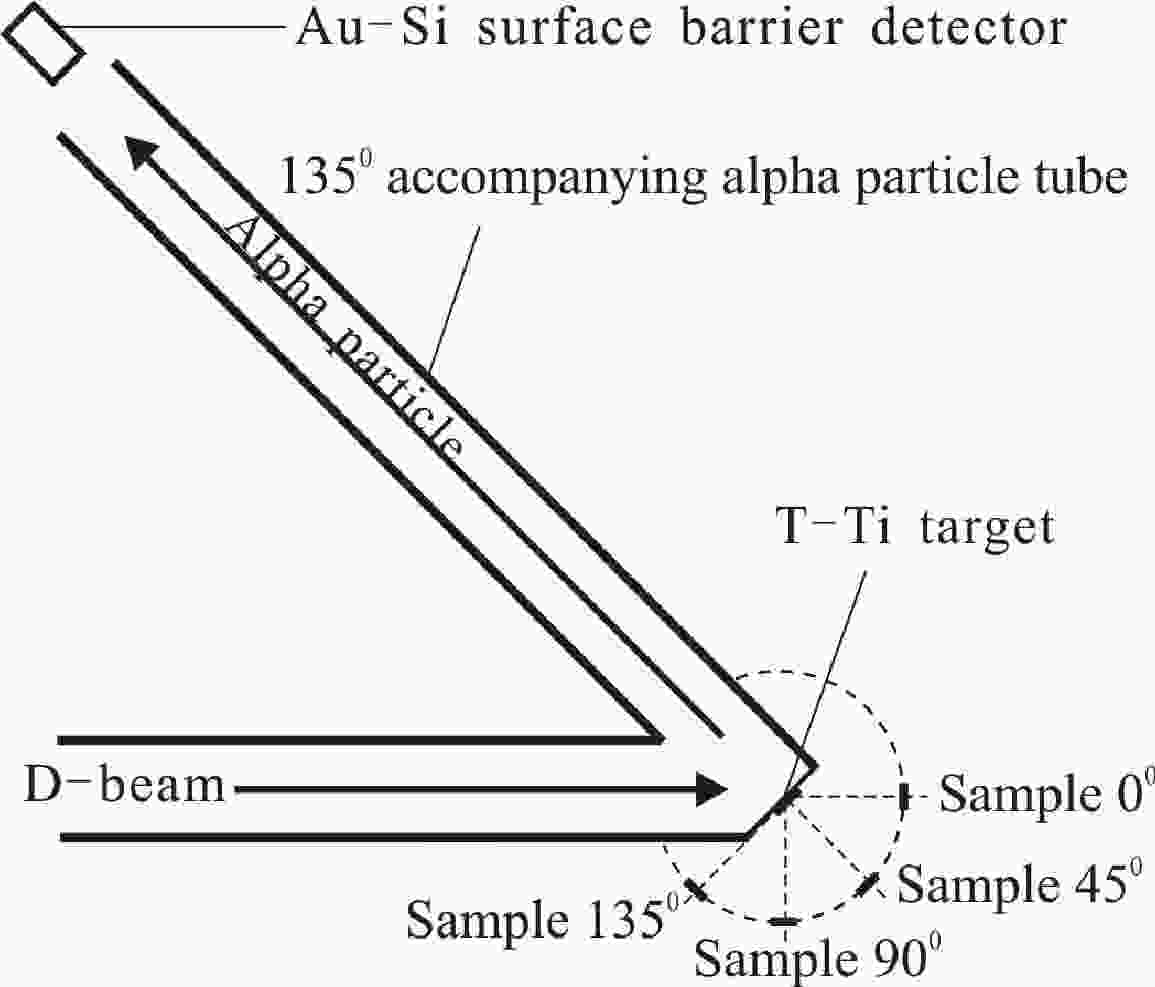
$n\cdot s^{-1}$ were generated via the D-T reaction with a deuteron beam energy of 255 keV and a beam current of 300-400 µA. The thickness of the solid tritium–titanium (T-Ti) target applied to the generator was 2.19${\rm mg\cdot cm^{-2}}$ . For the irradiation of the samples, an Au-Si surface barrier detector was used at 135° accompanying α particle tube to correct small variations in neutron flux. The samples were placed at 0°-135° angles relative to the direction of the deuteron beam, and the distances from the center of the T-Ti target were approximately 40-50 mm (as shown inFig. 1). The neutron energies in the measurements depend on the averages of cross section ratios for the90Zr(n,2n)89m+gZr and93Nb(n,2n)92mNb reactions [8].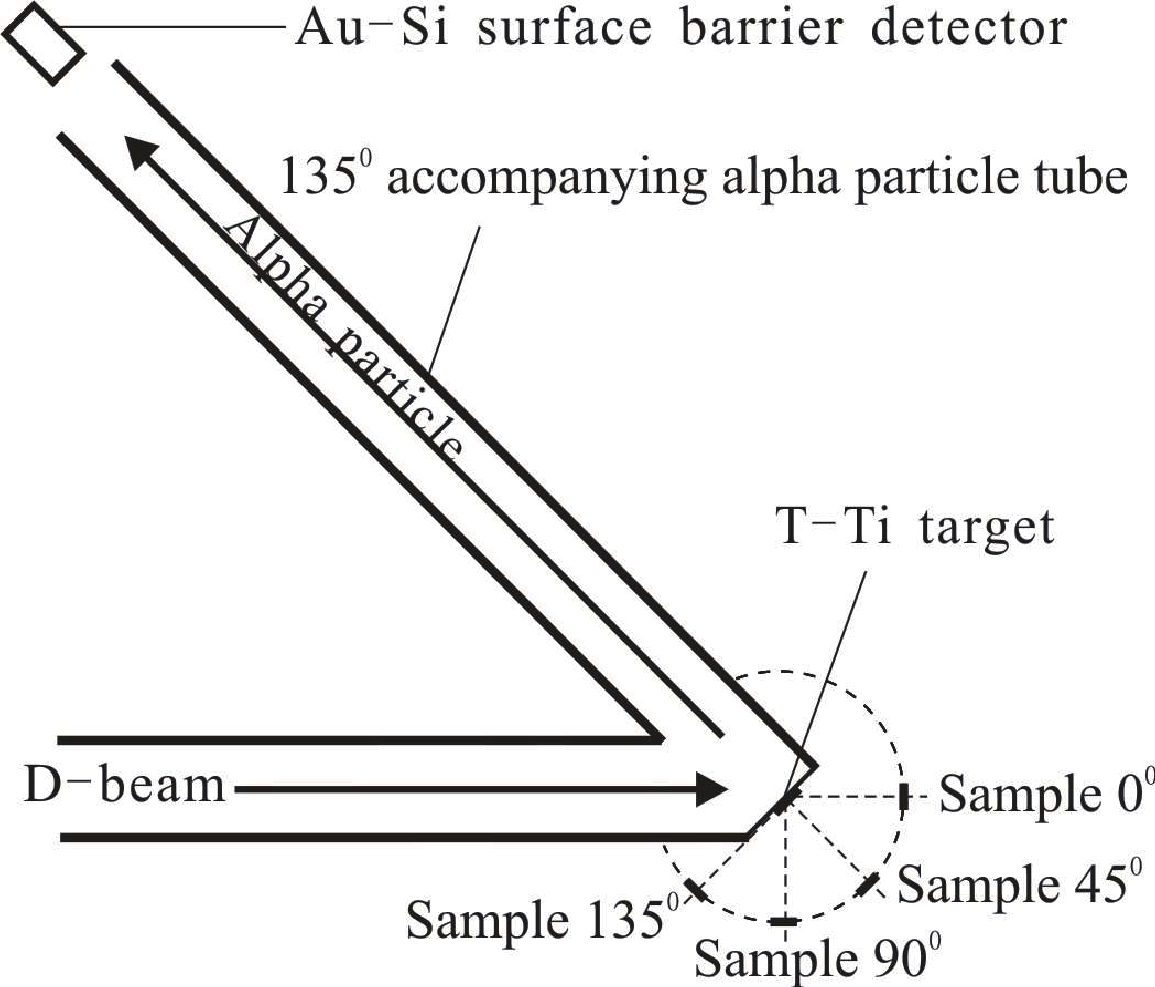
Figure 1.Schematic diagram of neutron flux variation monitoring and sample placement.
The γ-ray activities of93m+gY,97Zr,95Zr,87mSr,91Sr,90mY,92Y,94Y, and92mNb were determined by a well-calibrated GEM-60P coaxial high-purity germanium ORTEC detector made in the USA (crystal diameter: 70.1 mm, crystal length: 72.3 mm) with a relative efficiency of 68% and an energy resolution of 1.69 keV at 1.332 MeV. The efficiency of the detector was calibrated in advance using a series of standard γ sources.
Decay characteristics of the product nuclides and the natural abundance of target isotopes under investigation are summarized inTable 1[9]. The natural abundance of93Nb is adopted from Ref. [10].
reaction abundance of target isotope (%) product nuclides T1/2 Eγ/keV Iγ(%) 94Zr(n,d*) 17.38 93m+gY 10.18 h 266.9 7.4 96Zr(n,γ) 2.8 97Zr 16.749 h 743.36 93.09 96Zr(n,2n) 2.8 95Zr 64.032 d 756.725 54.38 90Zr(n,α) 51.45 87mSr 2.815 h 388.531 82.19 94Zr(n,α) 17.38 91Sr 9.65 h 1024.3 33.5 90Zr(n,p) 51.45 90mY 3.19 h 479.51 90.74 92Zr(n,p) 17.15 92Y 3.54 h 934.47 13.9 94Zr(n,p) 17.38 94Y 18.7 m 918.74 56 93Nb(n,2n) 100 92mNb 10.15 d 934.44 99.15 Table 1.Reactions and associated decay data of product nuclides.
-
The measured cross sections were calculated by the formula provided by Xiangzhong Konget al. [11].
The experimental cross sections of the94Zr(n,d*)93m+gY,96Zr(n,γ)97Zr,96Zr(n,2n)95Zr,90Zr(n,α)87mSr,94Zr(n,α)91Sr,90Zr(n,p)90mY,92Zr(n,p)92Y, and94Zr(n,p)94Y reactions were acquired. The monitor reaction was the93Nb(n,2n)92mNb reaction, whose cross sections are 457.9 ± 6.8, 459.8 ± 6.8, 459.8 ± 6.8, and 459.7 ± 5.0 mb at the neutron energies of 13.5, 14.1, 14.4, and 14.8 MeV, respectively [12]. The measured cross sections are listed inTable 2and charted inFigs. 2-9. The cross sections of the94Zr(n,d*)93m+gY,96Zr(n,γ)97Zr,96Zr(n,2n)95Zr,90Zr(n,α)87mSr,94Zr(n,α)91Sr,90Zr(n,p)90mY,92Zr(n,p)92Y, and94Zr(n,p)94Y reactions around 14 MeV neutrons have been measured by 2, 4, 12, 22, 20, 24, 21, 23 groups, respectively [1]. Previously obtained experimental cross sections around 14 MeV neutrons for the94Zr(n,d*)93m+gY and96Zr(n,γ)97Zr reactions [2-6] are also charted inFigs. 2-3for comparison. For the remainder, previous measurements [13-24], whose results were published after 1990, are charted inFigs. 4-9for comparison.
reaction the measured cross sections (in mb) at various neutron energies (in MeV) literature valuesEn/MeV,σ/mb En=13.5±0.3 En=14.1±0.2 En=14.4±0.3 En=14.8±0.2 94Zr(n,d*)93m+gY 1.15±0.06 1.19±0.06 1.93±0.09 2.17±0.10 96Zr(n,γ)97Zr 2.33±0.10 2.24±0.09 1.85±0.09 1.84±0.08 96Zr(n,2n)95Zr 1502±63 1520±66 1521±68 1577±70 90Zr(n,α)87mSr 2.9±0.2 3.1±0.2 3.6±0.2 3.6±0.2 94Zr(n,α)91Sr 3.86±0.16 4.10±0.18 4.77±0.20 5.09±0.22 90Zr(n,p)90mY 9.8±0.4 10.1±0.5 11.4±0.5 11.1±0.5 92Zr(n,p)92Y 17.2±0.7 17.8±0.8 21.4±0.9 20.2±0.9 94Zr(n,p)94Y 5.2±0.3 6.5±0.3 7.3±0.4 Table 2.Summary of cross section measurements.
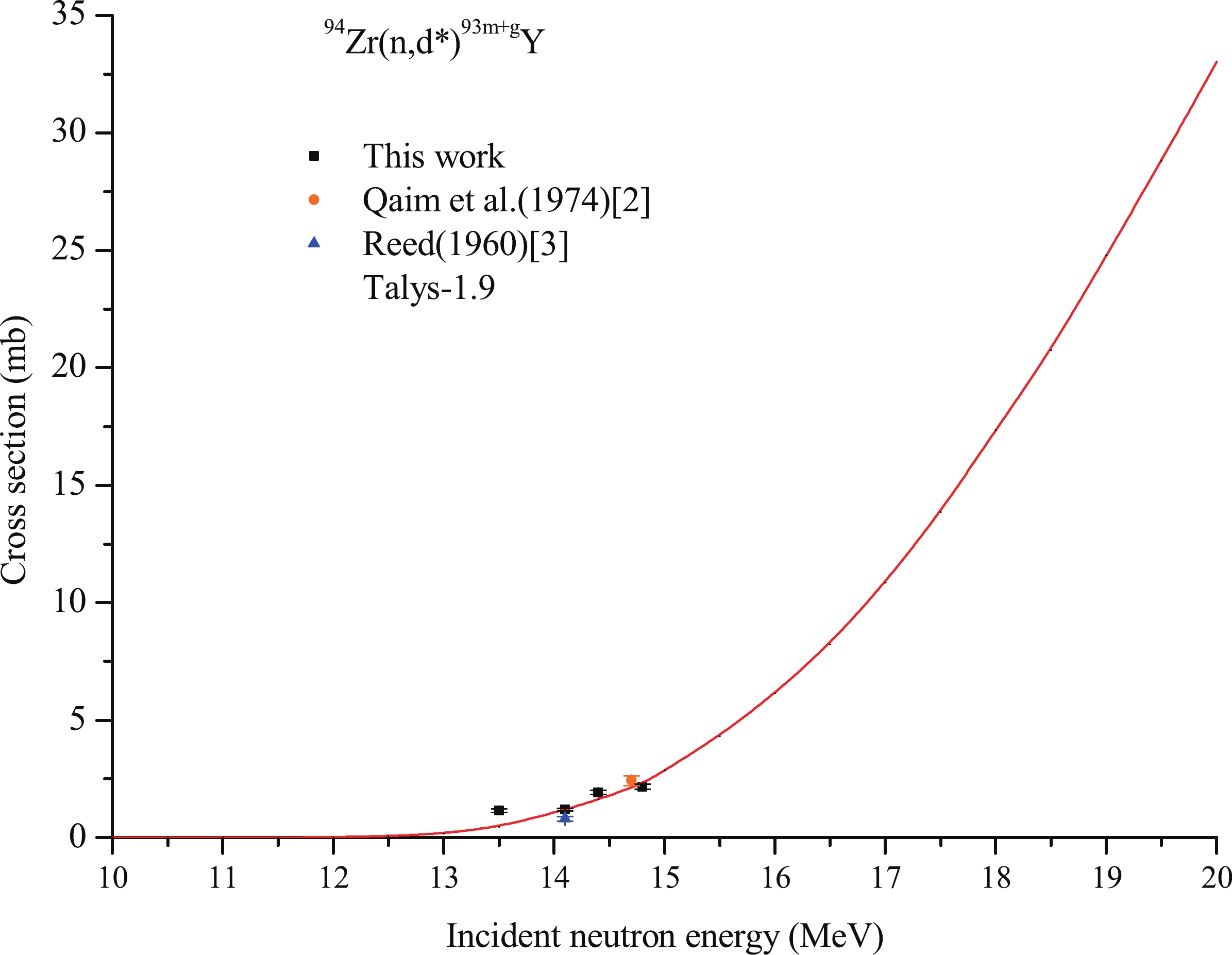
Figure 2.(color online) Cross section of94Zr(n,d*)93m+gY reaction.
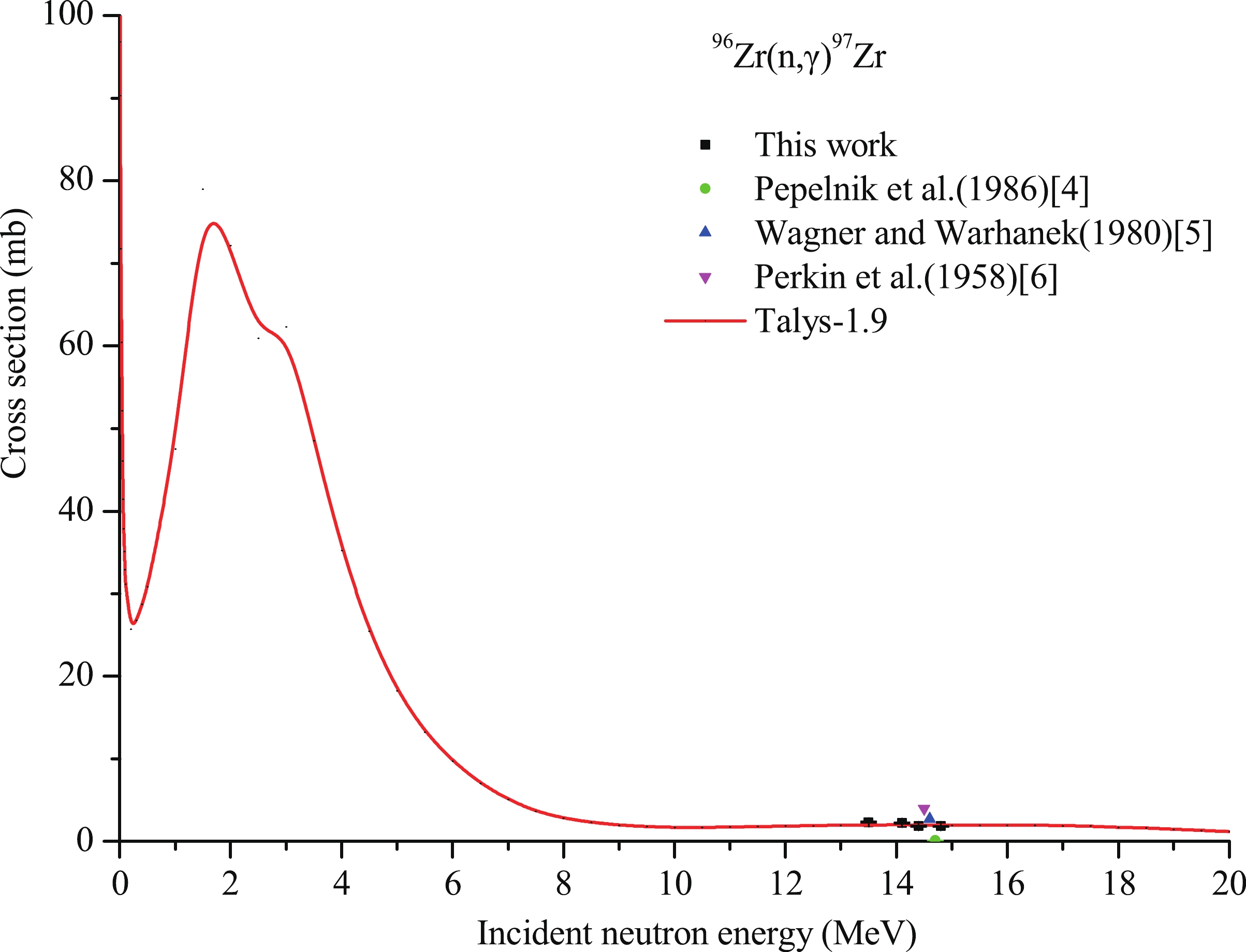
Figure 3.(color online) Cross section of96Zr(n,γ)97Zr reaction.
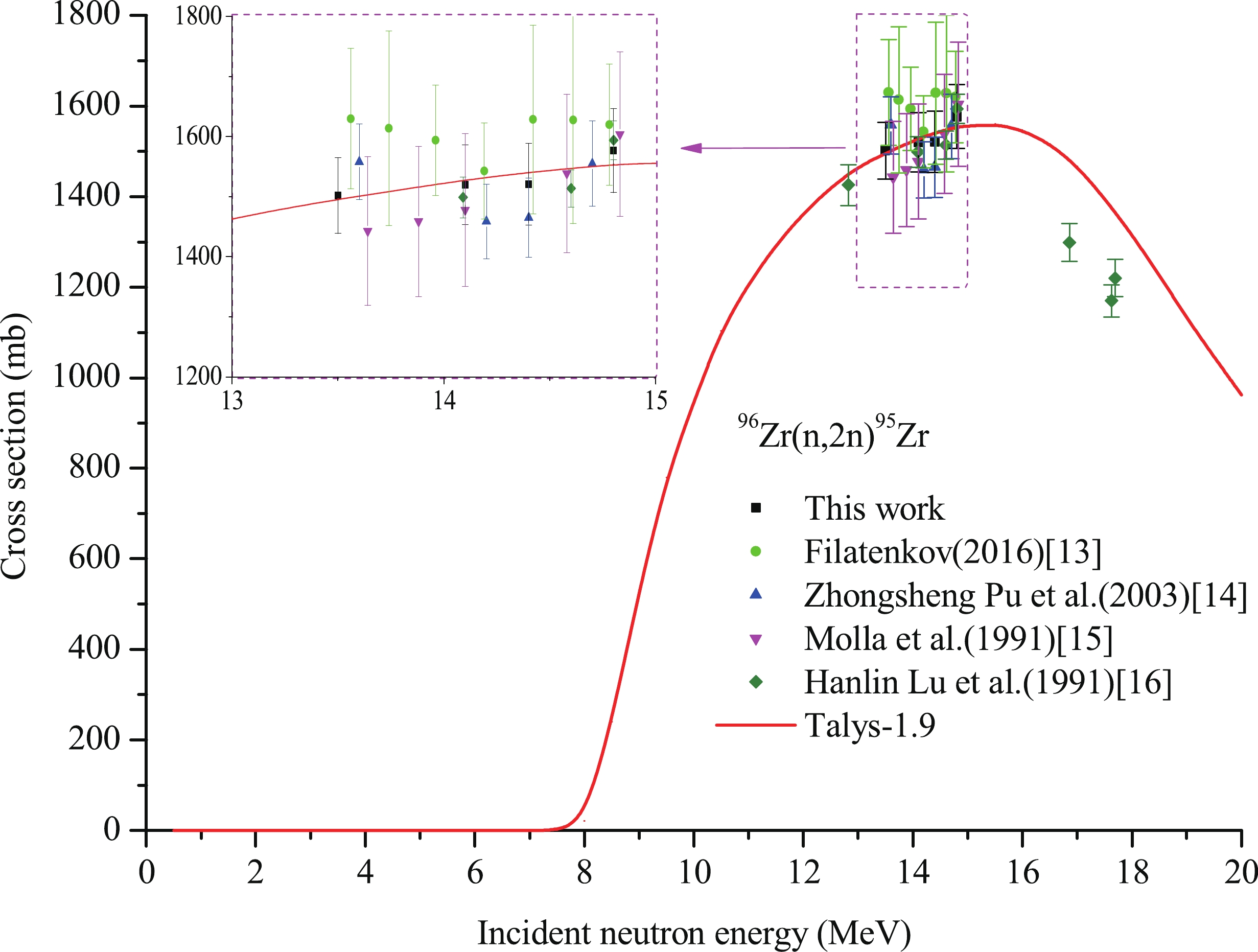
Figure 4.(color online) Cross section of96Zr(n,2n)95Zr reaction.
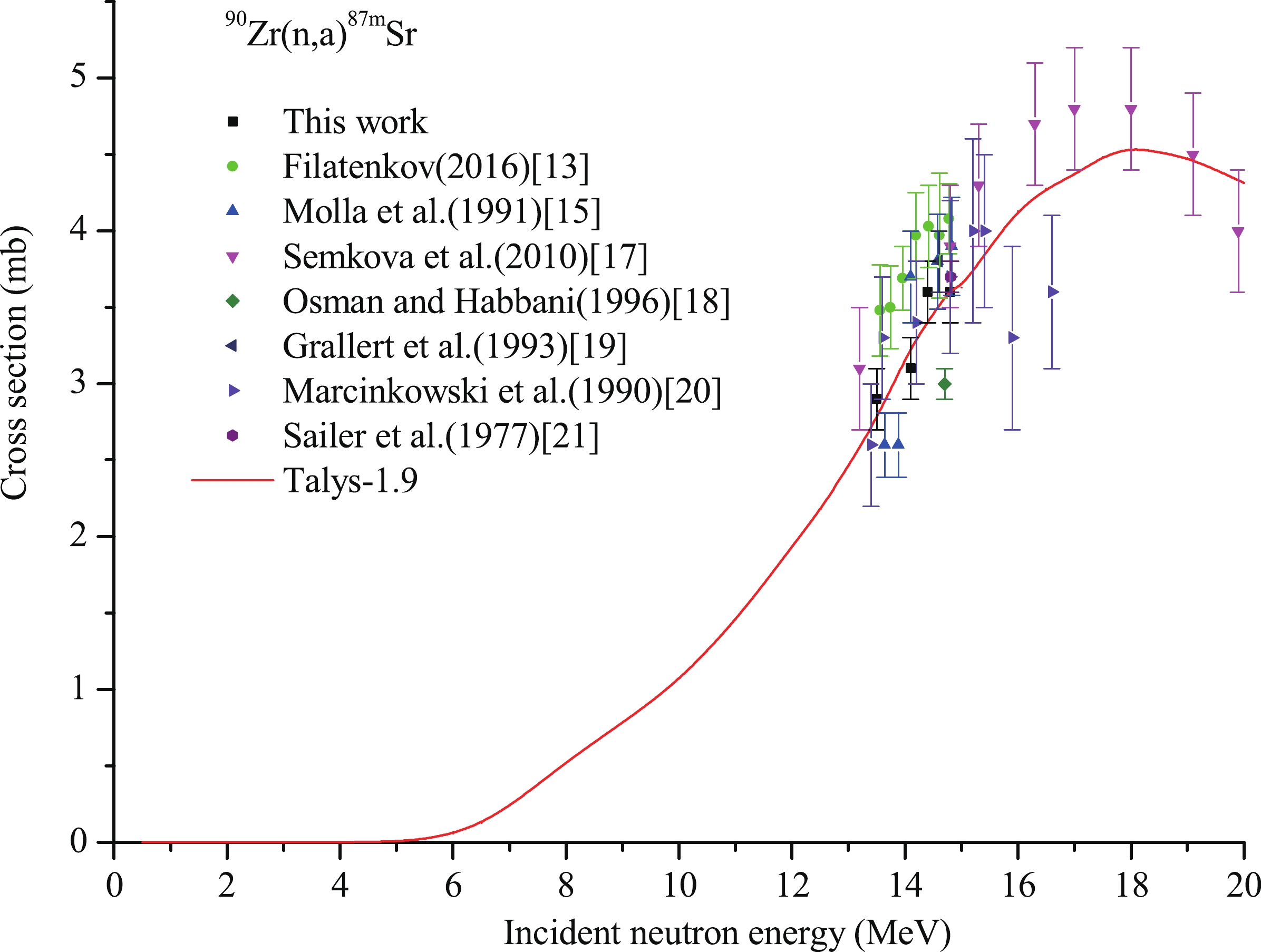
Figure 5.(color online) Cross section of90Zr(n,α)87mS reaction.
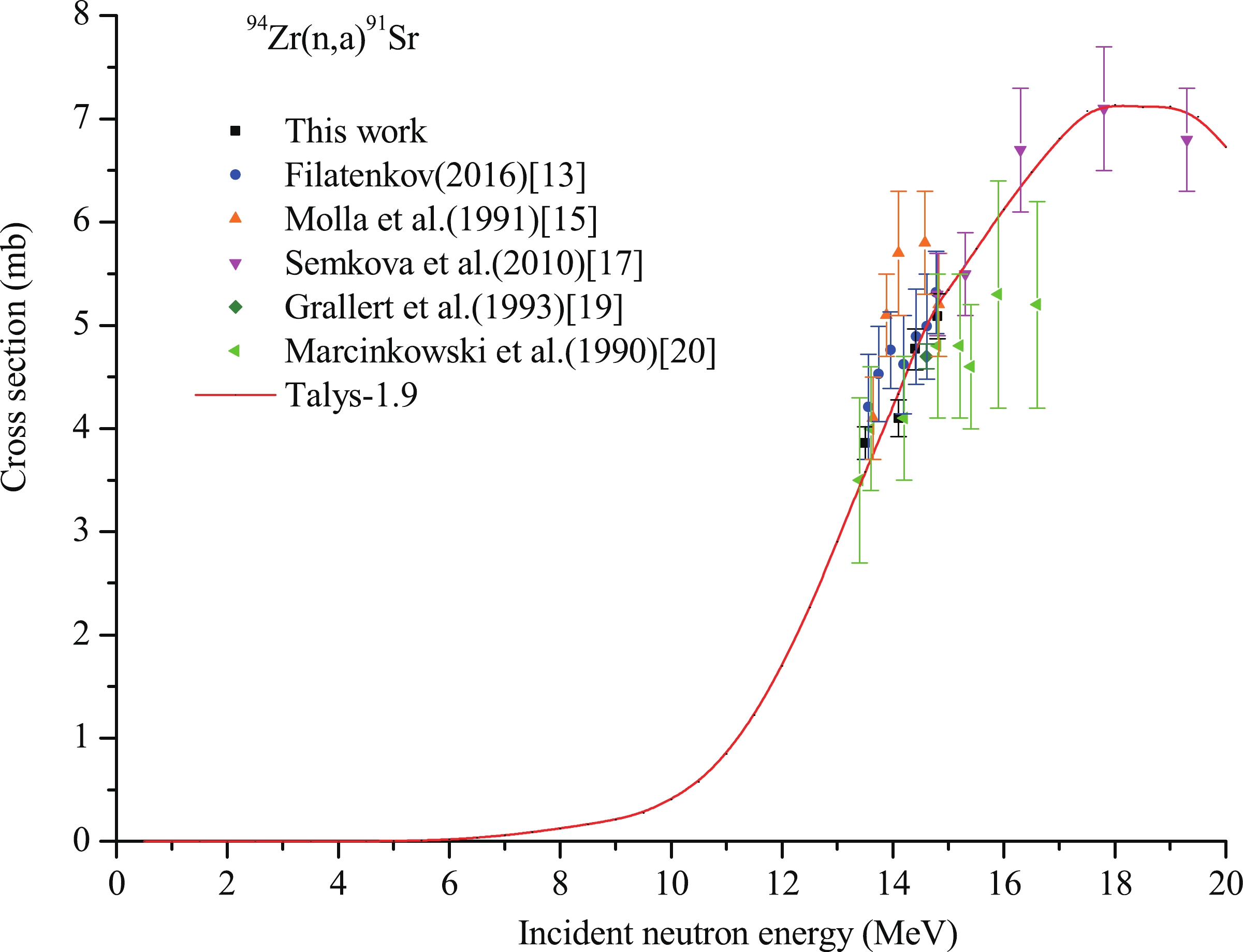
Figure 6.(color online) Cross section of94Zr(n,α)91Sr reaction.
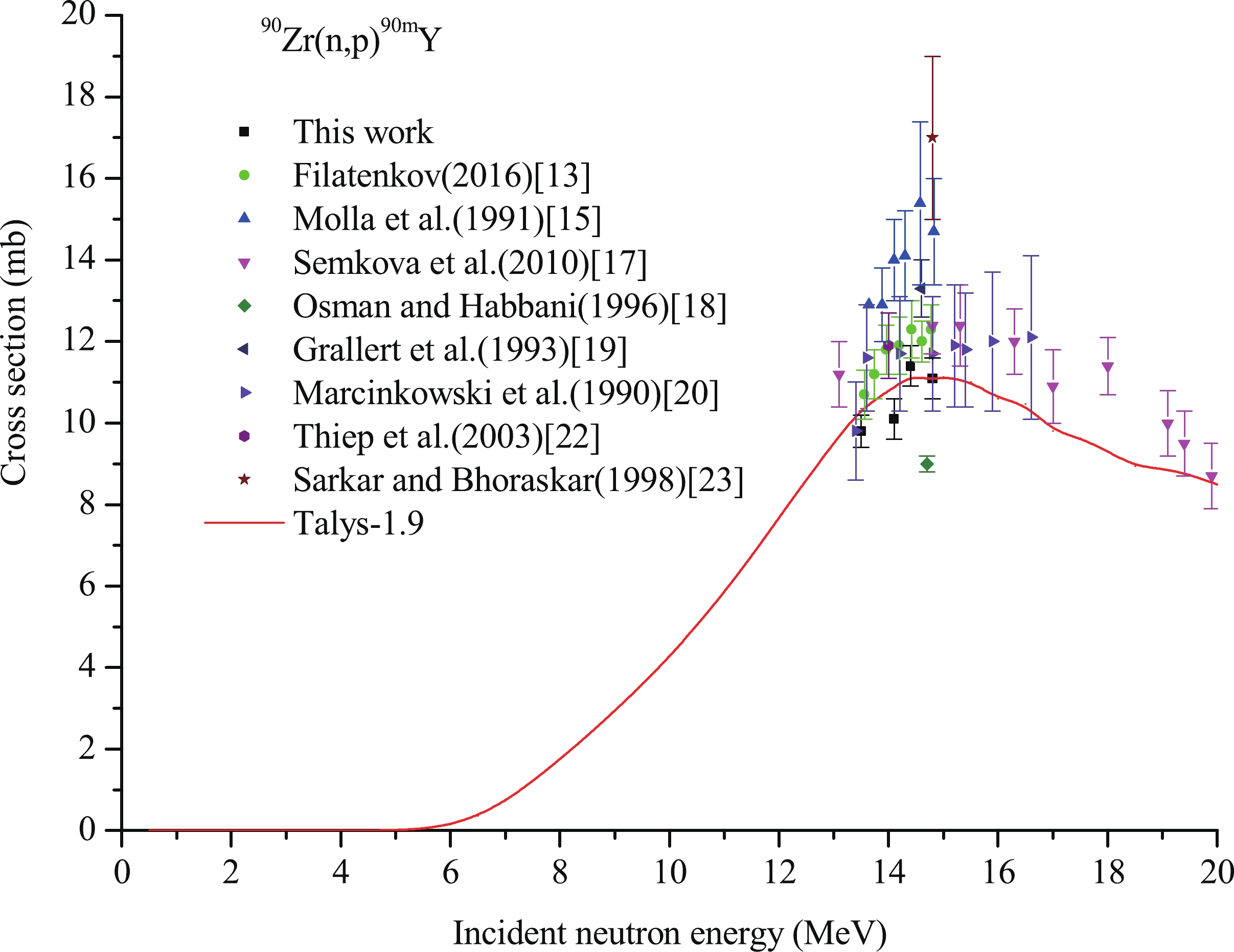
Figure 7.(color online) Cross section of90Zr(n,p)90mY reaction.
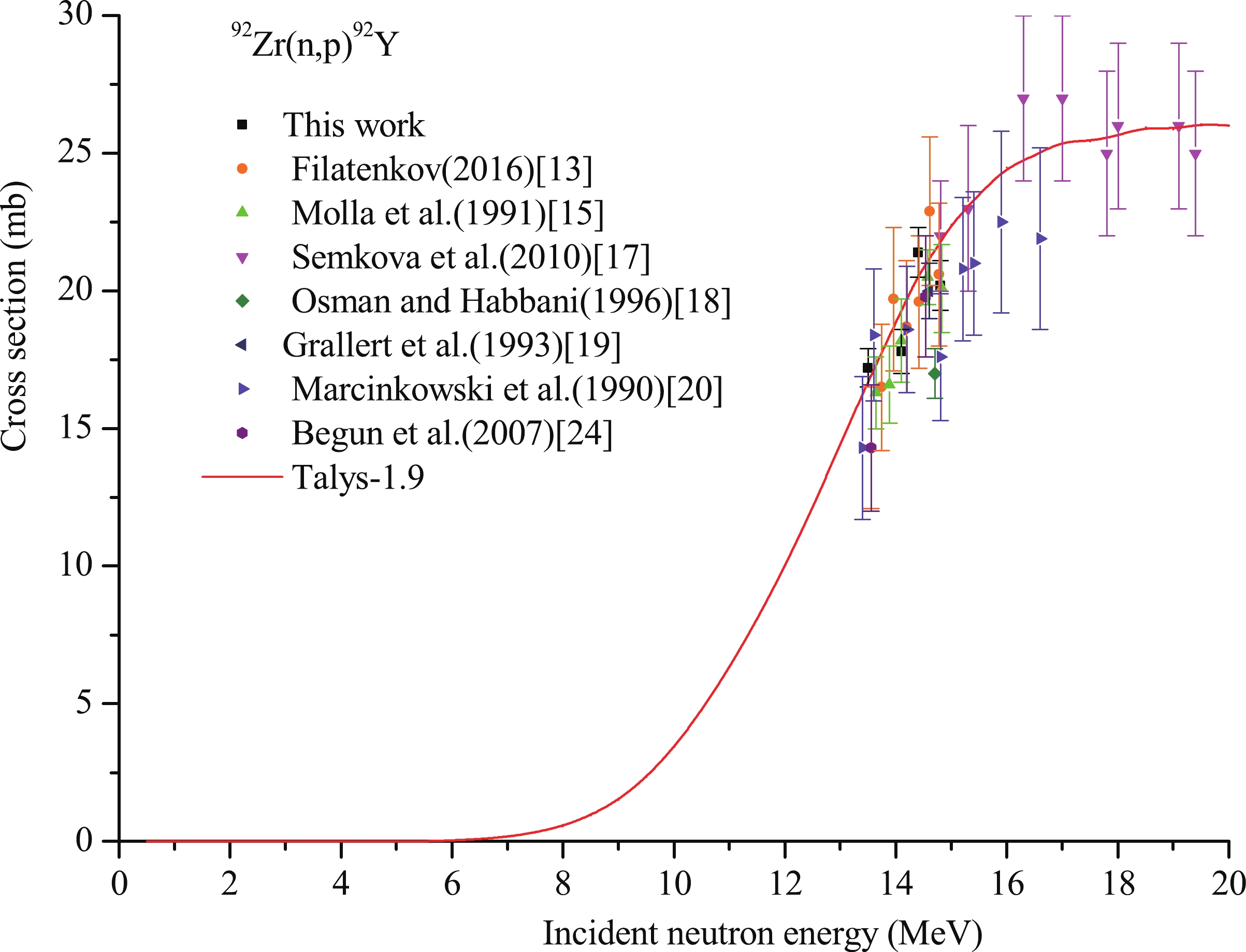
Figure 8.(color online) Cross section of92Zr(n,p)92Y reaction.
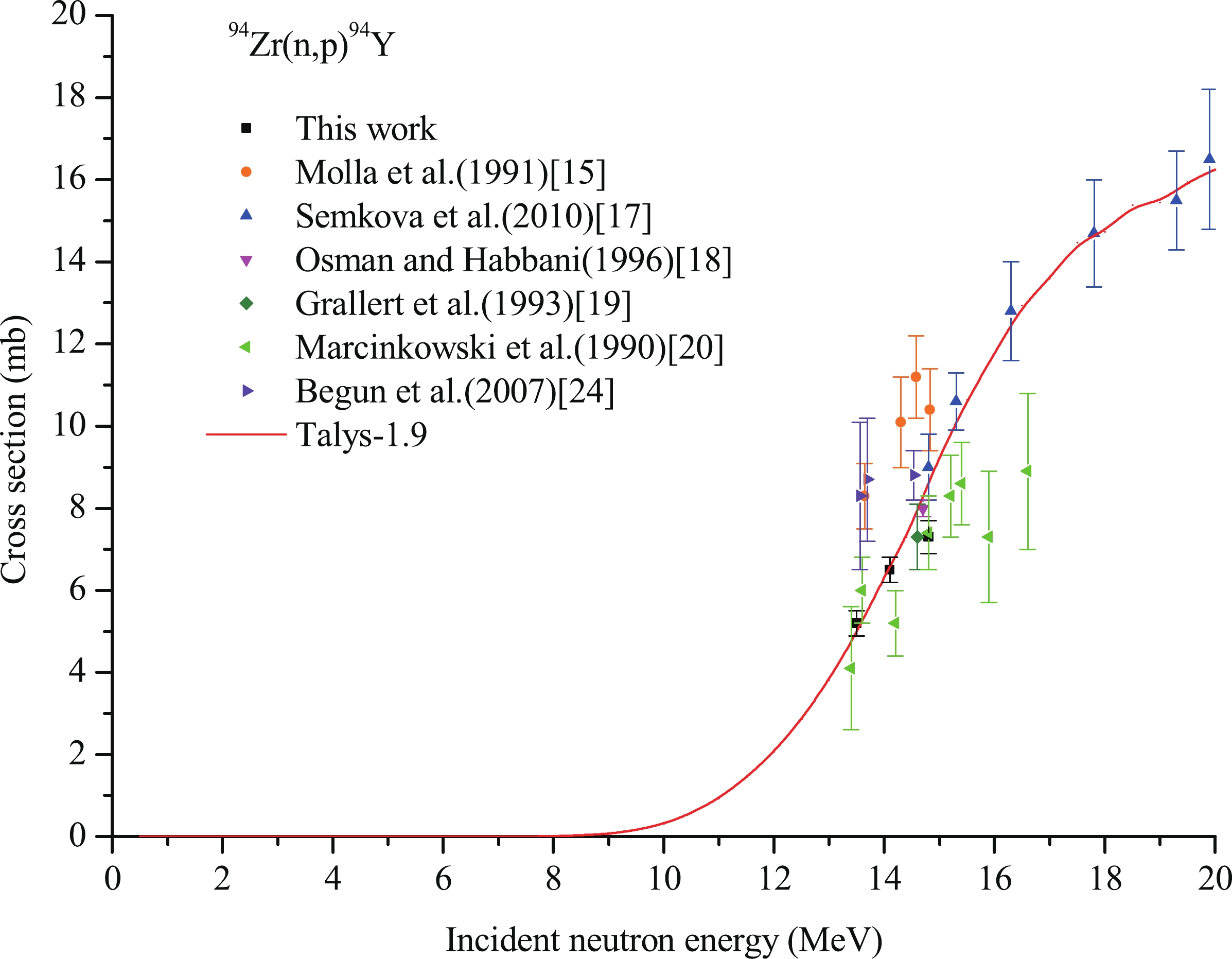
Figure 9.(color online) Cross section of94Zr(n,p)94Y reaction.
Theoretical calculations of excitation functions of the94Zr(n,d*)93m+gY,96Zr(n,γ)97Zr,96Zr(n,2n)95Zr,90Zr(n,α)87mSr,94Zr(n,α)91Sr,90Zr(n,p)90mY,92Zr(n,p)92Y, and94Zr(n,p)94Y reactions were performed using the nuclear theoretical model program system Talys-1.9, fully described in the Talys-1.9 manual [7]. Their excitation curves were obtained within the incident neutron energy range from the threshold to 20 MeV, as shown inFigs. 2-9for comparison. Different parameters in the theoretical model program system Talys-1.9 were set according to our experimental cross sections and the results in previously published works [2-6,13-24] for different nuclear reactions. For example, the optical model potential (OMP) parameterrVwas set for the96Zr(n,γ)97Zr,96Zr(n,2n)95Zr, and90Zr(n,α)87mSr reactions, the OMP parameterrVandaVwere set for the94Zr(n,d*)93m+gY,94Zr(n,α)91Sr, and92Zr(n,p)92Y reactions, the OMP parameterrV,aVand the level density parameter at the neutron separation energy were set for the94Zr(n,p)94Y reaction, the OMP parameterrV,aV, model for level densities and the overall constant for the matrix element or the optical model strength in the exciton model were set for the90Zr(n,p)90mY reaction.
Talys-1.9 (latest version of the TALYS code) is a computer code used for the analysis and prediction of nuclear reactions based on physics models and parameterizations [7]. It is a versatile tool for the analyses of basic microscopic scientific experiments or generation of nuclear data for applications. It can simulate nuclear reactions involving neutrons, photons, protons, deuterons, tritons,3He, and alpha-particles in the 1 keV-200 MeV energy range and for target nuclides of mass number range (12 <A< 339) [7]. Therefore, the TALYS code has been widely used in relevant research by most scientists [25-28].
Two or more reactions may produce the same product nucleus due to the use of natural zirconium foils in this work. These include the96Zr(n,2n)95Zr and94Zr(n,γ)95Zr reactions, the90Zr(n,α)87mSr and91Zr(n,n'α)87mSr reactions, the90Zr(n,p)90mY,91Zr(n,d*)90mY and92Zr(n,t)90mY reactions, the92Zr(n,p)92Y and94Zr(n,t)92Y reactions, and the94Zr(n,p)94Y and96Zr(n,t)94Y reactions. Thus, the cross sections obtained for the96Zr(n,2n)95Zr reaction include the contribution from the94Zr(n,γ)95Zr reaction, which can be neglected, as it has a very small cross section (μb) around the neutron energy of 14 MeV. The cross sections obtained for the90Zr(n,α)87mSr reaction include the contribution of the91Zr(n,n'α)87mSr reaction, which can be neglected as it has a very small cross section (μb). The cross sections obtained for the90Zr(n,p)90mY reaction include the contribution of the91Zr(n,d*)90mY and92Zr(n,t)90mY reactions, and the contribution of the92Zr(n,t)90mY reaction can be neglected because its cross section is small (μb). The cross section values obtained for the92Zr(n,p)92Y reaction include the contribution of the94Zr(n,t)92Y reaction, which can be neglected because it has a very small cross section (μb). The cross sections obtained for the94Zr(n,p)94Y reaction include the contribution of the96Zr(n,t)94Y reaction, which can be neglected, as it has a very small cross section (μb).
-
In our work, the errors stem mainly from the counting statistics (0.2%-5.7%), standard cross section (1.1%-1.5%), detector efficiency (2.0%), sample weight (0.1%), sample geometry (1.0%), γ-ray self-absorption (1.0%-1.5%), and the fluctuation of the neutron flux (1.0%), among others.
For the94Zr(n,d*)93m+gY reaction, as shown inTable 2andFig. 2, the trend of the theoretical excitation curve obtained by the computer code system Talys-1.9 increases with increasing incident neutron energy around 14 MeV. In the neutron energy range of 13.5-14.8 MeV, the fitted line of our experimental values is in good agreement with the theoretical excitation curve obtained by Talys-1.9. These two existing experimental datasets [2,3] are well distributed on both sides of the theoretical curve, although there is a significant difference between them, which is reliable. The theoretical excitation curve generally matches these experimental data (including our results) reasonably well.
For the96Zr(n,γ)97Zr reaction,Table 2andFig. 3show that the fitting line of our results in the neutron energy range of 13.5-14.8 MeV is consistent with the theoretical excitation curve obtained by Talys-1.9 within the experimental error. The result of Pepelniket al. [4] is considerably lower than that of the fitting line of our experimental values and that of the theoretical excitation curve obtained by Talys-1.9 at the corresponding energy, which is dubious. The result of Perkinet al. [6] is significantly higher than that of the fitting line of our experimental values and that of theoretical excitation curve obtained by Talys-1.9 at the corresponding energy, which is likewise dubious. The result of Wagner and Warhanek [5] is close to that of the fitting line of our experimental values and that of theoretical excitation curve obtained by Talys-1.9 at the corresponding energy.
For the96Zr(n,2n)95Zr reaction, shown inTable 2andFig. 4, our experimental cross sections around the neutron energy of 14 MeV are in agreement, within the experimental error, with those of the fitting lines of Filatenkov [13], Mollaet al. [15], and Hanlin Luet al. [16] at the same energies as well as the theoretical values of the excitation curve obtained by Talys-1.9 at the corresponding energies. The three experimental datasets of Hanlin Luet al. [16] at neutron energies of 16.86, 17.63, and 17.69 MeV are significantly lower than the theoretical excitation curves obtained by Talys-1.9 at the corresponding energies, which is dubious. The fitted line of our cross sections around the neutron energy of 14 MeV is consistent with the theoretical excitation curve obtained by Talys-1.9 within experimental error.
The cross sections of the90Zr(n,α)87mSr reaction are shown inTable 2andFig. 5. They show that the fitted line of our experimental cross sections is in agreement, within the experimental error, with the fitted line of the cross sections of Marcinkowskiet al. [20], except for the two values at the neutron energies of 15.9 and 16.6 MeV as well as the theoretical excitation curve obtained by Talys-1.9. In contrast, the results of Filatenkov [13] and Semkovaet al. [17] are overall higher. The results of Mollaet al. [15] at neutron energies of 13.64 and 13.88 MeV are low, and at the neutron energies of 14.1, 14.58, 14.83 MeV, they are high.
For the94Zr(n,α)91Sr reaction, shown inTable 2andFig. 6, the fitted line of our experimental cross sections in the neutron energy range of 13.5-14.8 MeV is in agreement, within the experimental error, with the fitted line of the cross sections of Filatenkov [13] except for the three values at the neutron energies of 13.56, 13.74, and 13.96 MeV and the fitted line of Marcinkowskiet al. [20], as well as the theoretical excitation curve obtained by Talys-1.9. In contrast, the results of Mollaet al. [15] and the values of Filatenkov [13] at the neutron energies of 13.56, 13.74, 13.96 MeV are higher.
For the90Zr(n,p)90mY reaction, shown inTable 2andFig. 7, the results of Filatenkov [13], Mollaet al. [15], Grallertet al. [19], Thiepet al. [22] are higher. In particular, the result of Sarkar and Bhoraskar [23] is significantly higher than all the other results, which is dubious. In contrast, the result of Osman and Habbani [18] is significantly lower than all the other results, which is also dubious. Our experimental cross sections are in agreement, within the experimental error, with those of the fitted line of the cross sections of Marcinkowskiet al. [20] at the corresponding energies, as well as the theoretical values of the excitation curve obtained by Talys-1.9 at the corresponding energies.
For the92Zr(n,p)92Y reaction, shown inTable 2andFig. 8, the fitted line of our experimental cross sections in the neutron energy range of 13.5-14.8 MeV is in agreement, within the experimental error, with the fitted lines of the cross sections of Filatenkov [13], Mollaet al. [15] and Marcinkowskiet al. [20]. The theoretical excitation curve obtained by Talys-1.9 generally matches these experimental data well.
For the94Zr(n,p)94Y reaction, shown inTable 2andFig. 9, our experimental cross sections in the neutron energy range of 13.5-14.8 MeV are in agreement, within the experimental error, with those of the fitted line of the cross sections of Marcinkowskiet al. [20] at corresponding energies. At the neutron energies of 13.5 and 14.1 MeV, our experimental values are in agreement, within the experimental error, with those of theoretical excitation curve obtained by Talys-1.9 at the corresponding energies. The cross sections of Mollaet al. [15] and Begunet al. [24] are higher than that of the fitted line of our experimental values and that of theoretical excitation curve obtained by Talys-1.9 at the corresponding energy. The theoretical excitation curve matches these experimental data well in general.
-
The experimental cross sections of the94Zr(n,d*)93m+gY,96Zr(n,γ)97Zr,96Zr(n,2n)95Zr,90Zr(n,α)87mSr,94Zr(n,α)91Sr,90Zr(n,p)90mY,92Zr(n,p)92Y, and94Zr(n,p)94Y reactions have been measured in the neutron energy range of 13.5-14.8 MeV via the activation technique. The excitation curves of the above-mentioned eight nuclear reactions within the incident neutron energy range from the threshold to 20 MeV were obtained by adopting the nuclear theoretical model program system Talys-1.9. Generally, our experimental results agree with some previous experimental values, as well as those of the theoretical excitation curve obtained by Talys-1.9 at the corresponding energies. The theoretical excitation curves match the experimental data well.
The results obtained in the present work are useful for strengthening the database, and the theoretical excitation curves are significant for the development and utilization of nuclear energy and the related applications.
We thank the crew of the K-400 Neutron Generator at Institute of Nuclear Physics and Chemistry China Academy of Engineering Physics for performing the irradiation experiments.
Cross section measurements on zirconium isotopes for ~14 MeV neutrons and their theoretical calculations of excitation functions
- Received Date:2020-07-10
- Available Online:2020-12-01
Abstract:The cross sections for the94Zr(n,d*)93m+gY,96Zr(n,γ)97Z,96Zr(n,2n)95Zr,90Zr(n,α)87mSr,94Zr(n,α)91Sr,90Zr(n,p)90mY,92Zr(n,p)92Y, and94Zr(n,p)94Y reactions have been measured in the neutron energy range of 13.5-14.8 MeV by means of the activation technique. The neutrons were produced via the D-T reaction. A high-purity germanium detector with high energy resolution was used to measure the induced γ activities. In combination with the nuclear reaction theoretical models, the excitation curves of the above-mentioned eight nuclear reactions within the incident neutron energy range from the threshold to 20 MeV were obtained by adopting the nuclear theoretical model program system Talys-1.9. The resulting experimental cross sections were analyzed and compared with the experimental data from published studies. Calculations were performed using Talys-1.9 and are in agreement with our experimental results, previous experimental values, as well as results of the theoretical excitation curves at the corresponding energies. The theoretical excitation curves generally match the experimental data well.


 DownLoad: