


 Abstract
 HTML
HTML Reference
 Related
 PDF
PDF


-
The cross sections of nuclear reactions induced by neutrons serve as crucial data for nuclear reaction modeling, nuclear technology applications, nuclear weapon verification, and nuclear medicine detection [1−5]. The International Atomic Energy Agency (IAEA) has collected various reaction cross sections, including (n, 2n), (n,p), (n,α), (n,γ), (n,n′α), (n,d), and (n,t), through the Experimental Nuclear Reaction Data (EXFOR) database [1,4−10]. Among these, the reaction mechanism and cross section measurements of the (n, 2n) reaction caused by fast neutrons have always been a research focus in nuclear physics owing to their importance for neutron dose measurement, deuterium-tritium fusion reactor design, and neutron shielding for accelerator facilities. Additionally, these data are essential for estimating induced radioactivity, nuclear transmutation, and material radiation damage [1,2,4]. In reactor physics, krypton (Kr) is a critical neutron-absorbing fission product that significantly influences neutron economy and fuel cycle management. During reactor operation, gaseous Kr isotopes are generated via fission processes. These isotopes exhibit non-negligible neutron absorption cross sections, thereby reducing neutron availability for sustaining chain reactions or breeding fissile materials [11−13]. According to the EXFOR database, the (n, 2n) reactions at a neutron energy of 14 MeV are the most widely studied for solid natural targets as they have larger cross sections than other reactions. However, for gas targets, the difficulty in creating the target has resulted in insufficient measurement of reaction cross sections, with no corresponding cross section data available to date. Regarding the experimental measurement of the cross sections for neutron-induced krypton isotope nuclear reactions, Kondaiahet al. [14] first measured the cross sections of78Kr(n, 2n)77Kr,80Kr(n, 2n)79(m+g)Kr,80Kr(n, 2n)79mKr,82Kr(n, 2n)81mKr,86Kr(n, 2n)85mKr,80Kr(n,p)80mBr,82Kr(n,p)82(m+g)Br,84Kr(n,p)84Br, and85Kr(n,α)83gSe reaction channels at a neutron energy of 14.4 MeV in 1968. These measurements were performed using a natural abundance solid-state target fabricated from powders of the inert gas quinol-clathrate, [C6H4(OH)2]3-0.895Kr. Recently, Zenget al. [15] measured the cross section of the78Kr(n, 2n)77Kr reaction in the energy range of 13−15 MeV using a highly enriched78Kr gas target. However, neutron-induced cross sections of other krypton isotope reactions in a wide energy range have not been reported.
Systematics is an effective method for calculating the cross sections of nuclear reactions without experimental data [16−23]. The systematic formula is simplified based on the statistical model, consideringQ-value dependence. The mass number (A) and asymmetric parameter ((N−Z)/A) of the target nuclei are important input values in the formula. A reliable systematic formula requires a large number of high-precision experimental cross section data to accurately fit the coefficients at specific neutron energy points. However, the experimental cross sections ofA=80 and (N−Z)/A=0.1 are not included in the fitting process for the existing (n, 2n) reaction cross section systematic formula. An alternative approach for predicting the cross section of the (n, 2n) reaction is based on neural networks; however, it requires a large amount of experimental cross section data for training [1]. In the80Kr(n, 2n)79m,gKr reaction, the excited state of the formed nucleus decays to the ground state via 100% isomeric transition (seeFig. 1). In 1968, the Kondaiahet al. [14] used a characteristic gamma ray of 398 keV to measure the cross section of the80Kr(n, 2n)79Kr reaction at a neutron energy of 14.4±0.3 MeV. They reported a cross section value of 810 mb with an uncertainty of 7.4% based on a half-life of 34.92 h and ray intensity of 7.7%. The latest results for these two data are 35.04 h and 9.3%, respectively [24].
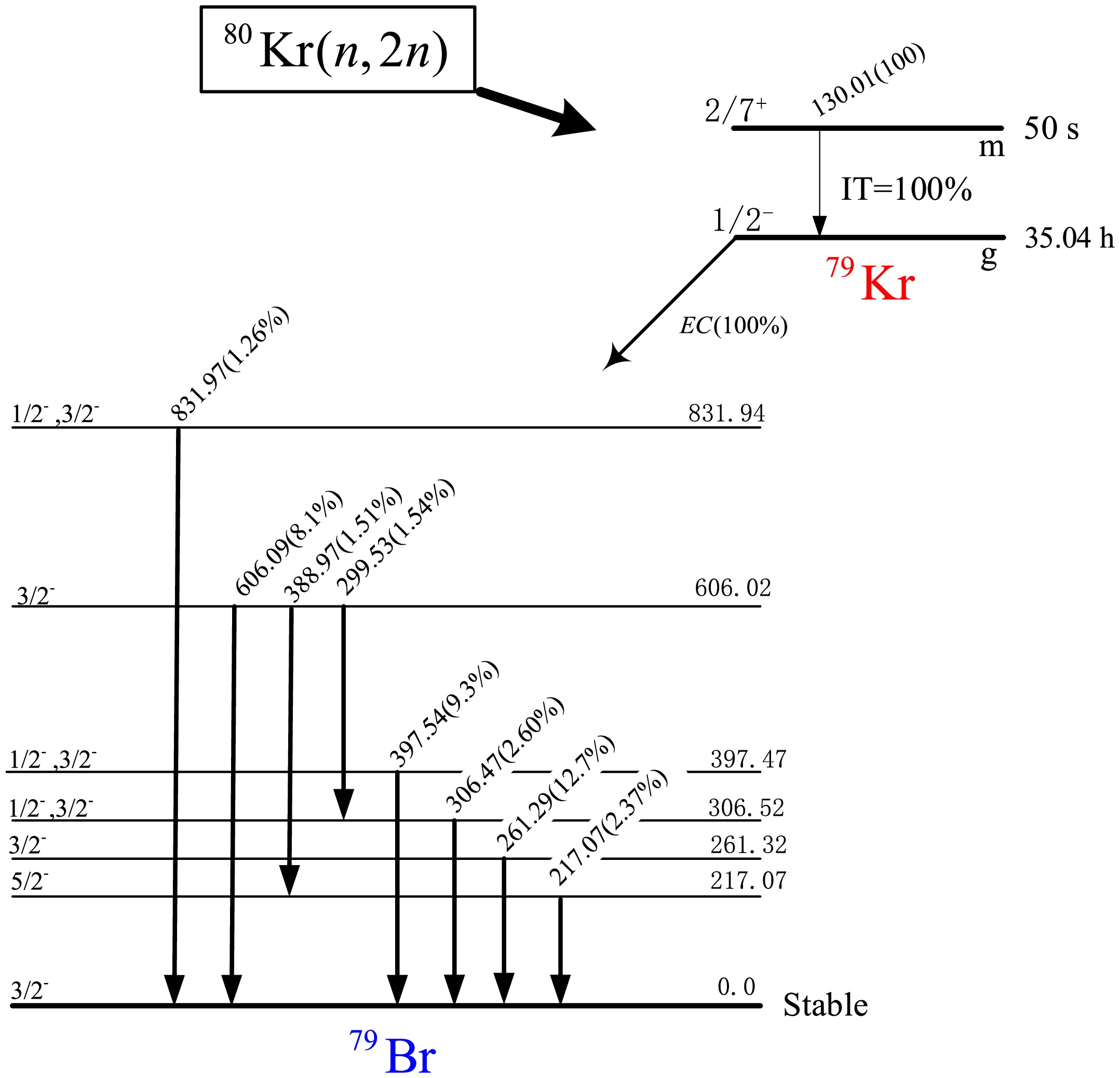
Figure 1.(color online) Metastable and ground states involved in the80Kr(n, 2n)79m,gKr reactions [24]. All energy values are in kiloelectronvolts. The bold black line indicates the transitions originating from both the excited and ground states, whereas the intensities listed in parentheses correspond to the rays emitted from these two states.
In this study, the latest decay data were used to determine the cross section of the80Kr(n, 2n)79Kr reaction. Highly enriched80Kr isotope gas samples were employed to eliminate the influence of neighboring isotope78Kr on the target reaction through (n,γ) reactions. We selected eight characteristic gamma rays to measure the activity of the generated nuclei, and the corresponding results were averaged with appropriate weighting to minimize the uncertainty in the measured cross section. Finally, we compared the final results with the experimental values reported in earlier literature [14], TALYS theoretical calculation curves [25], and evaluation curves of databases ENDF/B-VIII.0 [26], BROND-3.1 [27], JEFF- 3.3 [28], JENDL-5 [29], and TENDL-2023 [30].
-
Kr is an inert, environmentally friendly, and noncorrosive gas at ambient temperature and pressure. It has six stable isotopes, with natural abundance as follows:78Kr (0.355%),80Kr (2.286%),82Kr (11.593%),83Kr (11.500%),84Kr (56.987%), and86Kr (17.279%) [31]. To increase the number of atomic nuclei in the sample target while minimizing the influence of adjacent isotopes on the target reaction, we used the highly enriched (99.928%)80Kr isotope gas. The highly enriched80Kr gas was provided by ISOFLEX USA. The other isotopes and abundances in the gas included78Kr (0.0488%),82Kr (0.0016%),83Kr (0.004%),84Kr (0.004%), and86Kr (0.004%). The gas was stored in a stainless steel container shaped like a sphere, with an inner diameter of 20.0 mm and a wall thickness of 1.0 mm, where the pressure exceeded 100 atmospheres. Background measurements were conducted on the stainless steel materials used to manufacture the spherical containers. The gas was filled with liquid nitrogen and sealed after being weighed five times over a period of 76 days, with a weight change rate of less than 0.16%. A photograph of the spherical samples is presented inFig. 2. After gamma ray spectrum measurements, the weight of the gas was obtained by subtracting the container’s weight from the total weight. The weight of the80Kr gas used in this experiment was 0.18−0.29 g.
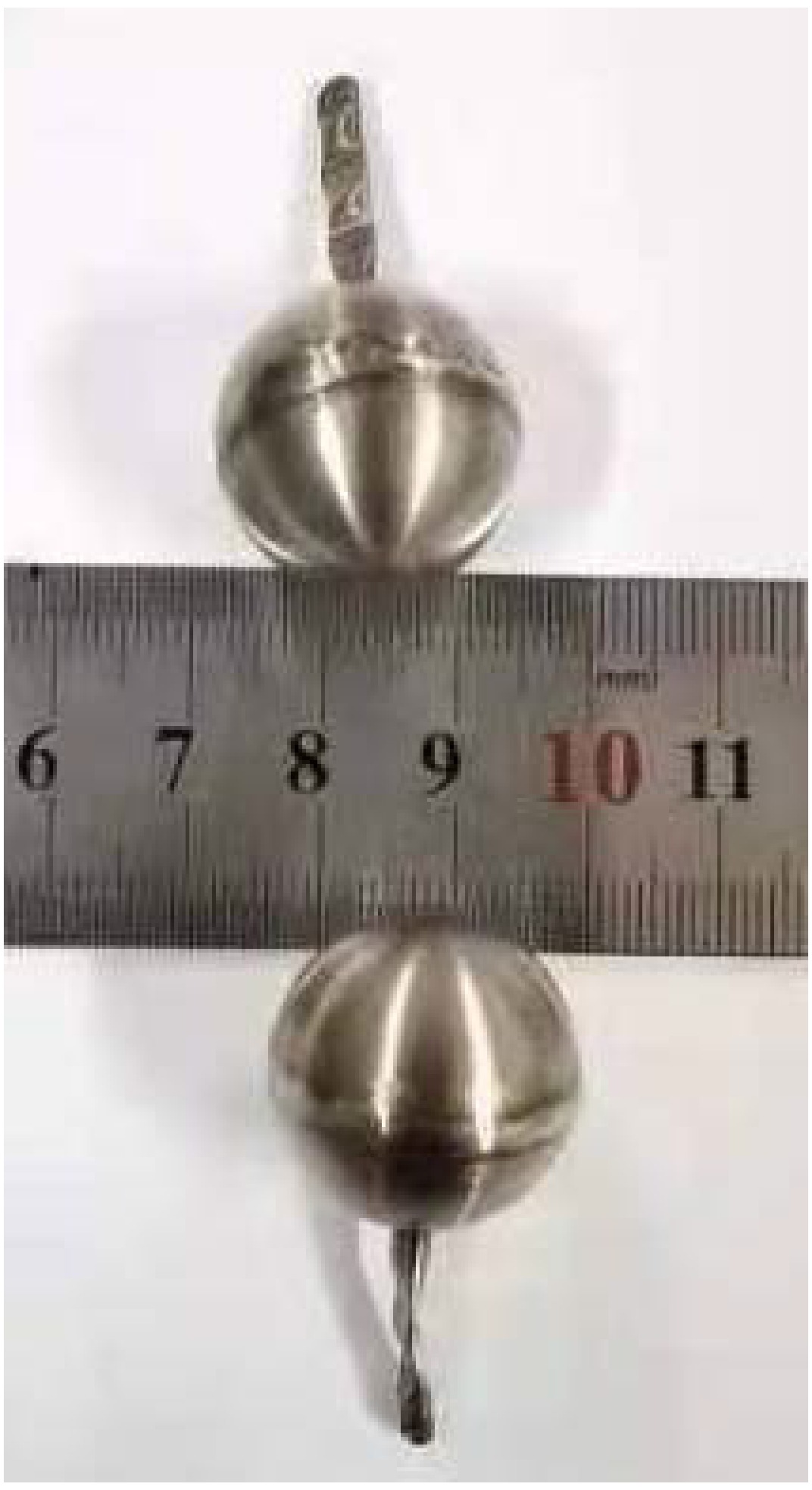
Figure 2.(color online) Photograph of the high-pressure spheres used in this work.
-
The neutron irradiation experiment was performed on the K-400 neutron generator at the China Academy of Engineering Physics (CAEP). The sample, composed of ZrNbAl-80Kr-AlNbZr, was coated with a cadmium sheet (1.0 mm thick and 99.95% pure) to minimize the influence of low-energy neutrons. Zr, Nb, and Al were metal circular discs with diameters of 20 mm; their purities were 99.5%, 99.99%, and 99.99% and thicknesses were 0.3, 0.4, and 0.3 mm, respectively. The sample groups were fixed at angles of 0º, 45º, 90º, 110º, and 135º relative to the deuterium beam incidence, with the sample placed 50 mm from the center of the T-Ti target (seeFig. 3). The3H(d,n)4He reaction produced monoenergetic neutrons with energies of 13−15 MeV, whereas the average energy of the incident deuterium beam was 135 keV, with a beam intensity of 240 μA. The neutron yield was approximately (4−5)×1010n/s. The sample group was irradiated continuously for 2 h.α-Particle counts were measured using a Au-Si surface barrier detector positioned at 135° to compensate for fluctuations in the neutron flux.
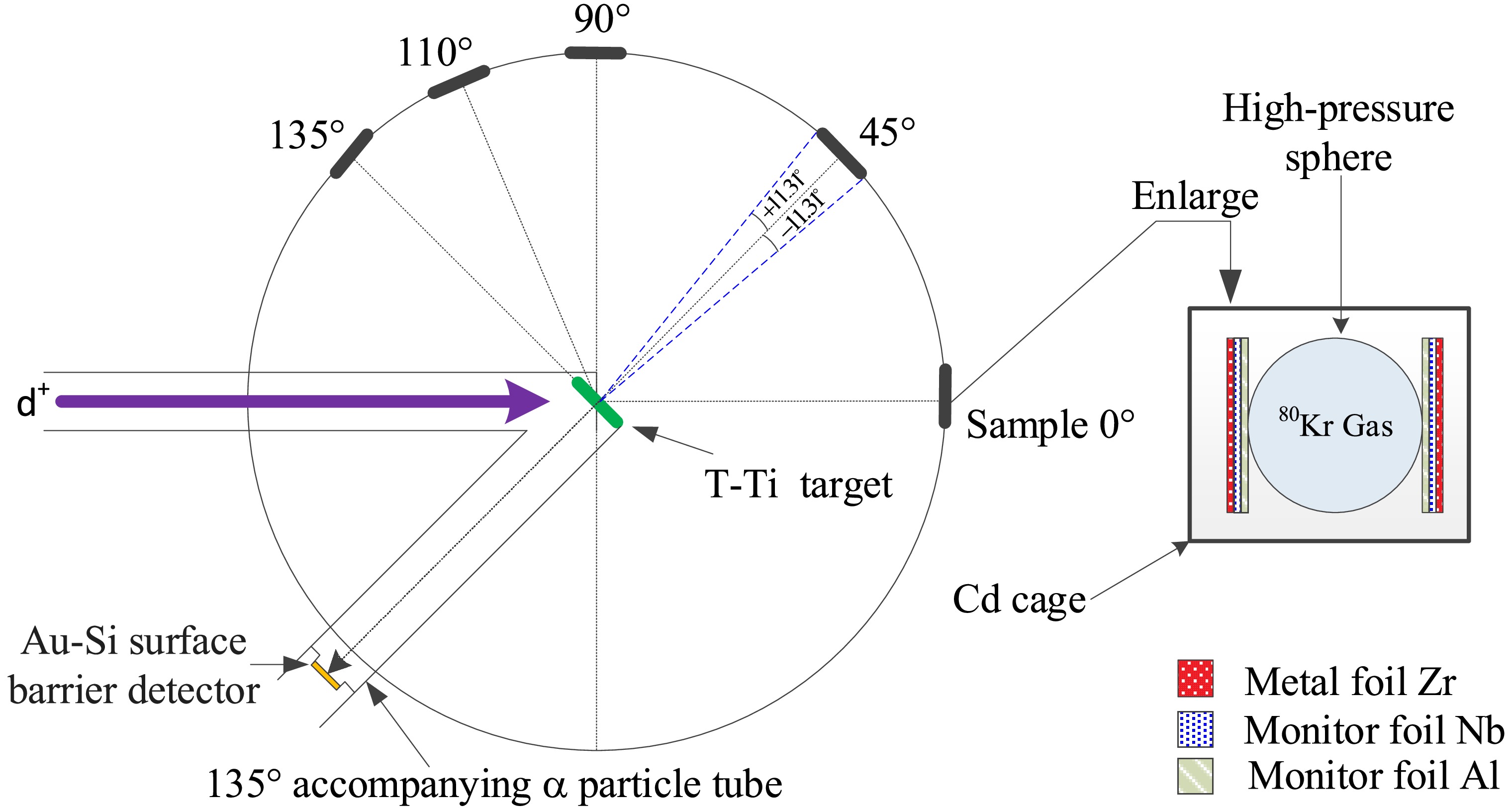
Figure 3.(color online) Schematic of the relative position of T-Ti target and80Kr sample.
-
The neutron energy at the location of the irradiated sample was calculated using theQ-value equation of the3H(d,n)4He reaction [32]. The neutron energies at 135°, 110°, 90°, 45°, and 0° were 13.59±0.12, 13.86±0.15, 14.13±0.16, 14.70±0.13, and 14.94±0.02 MeV, respectively. The uncertainty incorporated both the distance from the sample to the T-Ti target and the solid angle corresponding to the sample size. The results obtained using the cross section ratio method for90Zr(n, 2n)89m+gZr and93Nb(n, 2n)92mNb reactions [33], along with the neutron energy method for D-T reactions on a large sample provided earlier [34], are consistent with the above results within the range of uncertainty.
-
In general, the efficiency of a high-purity germanium detector (HPGe) depends on the incident photon energy (Eγ). Accurately determining the detector efficiency in the gamma ray energy range below 80 keV is difficult. Before measuring the gamma ray spectrum of irradiated samples, the efficiency of the HPGe detector was calibrated using four standard sources (152Eu,133Ba,137Cs, and226Ra). The fitting spline function,
$\varepsilon ({E_{\gamma }}) = \sum\nolimits_{n = 0}^5 {{B_n}} {{{[\ln ({E_\gamma })]}^n}}$ [8], with a correlation coefficient (R2) of 0.9988, was used to obtain gamma ray efficiency. The fitting results are shown inFig. 4. The Monte Carlo method was applied to correct the geometric differences between the spherical sample and standard source.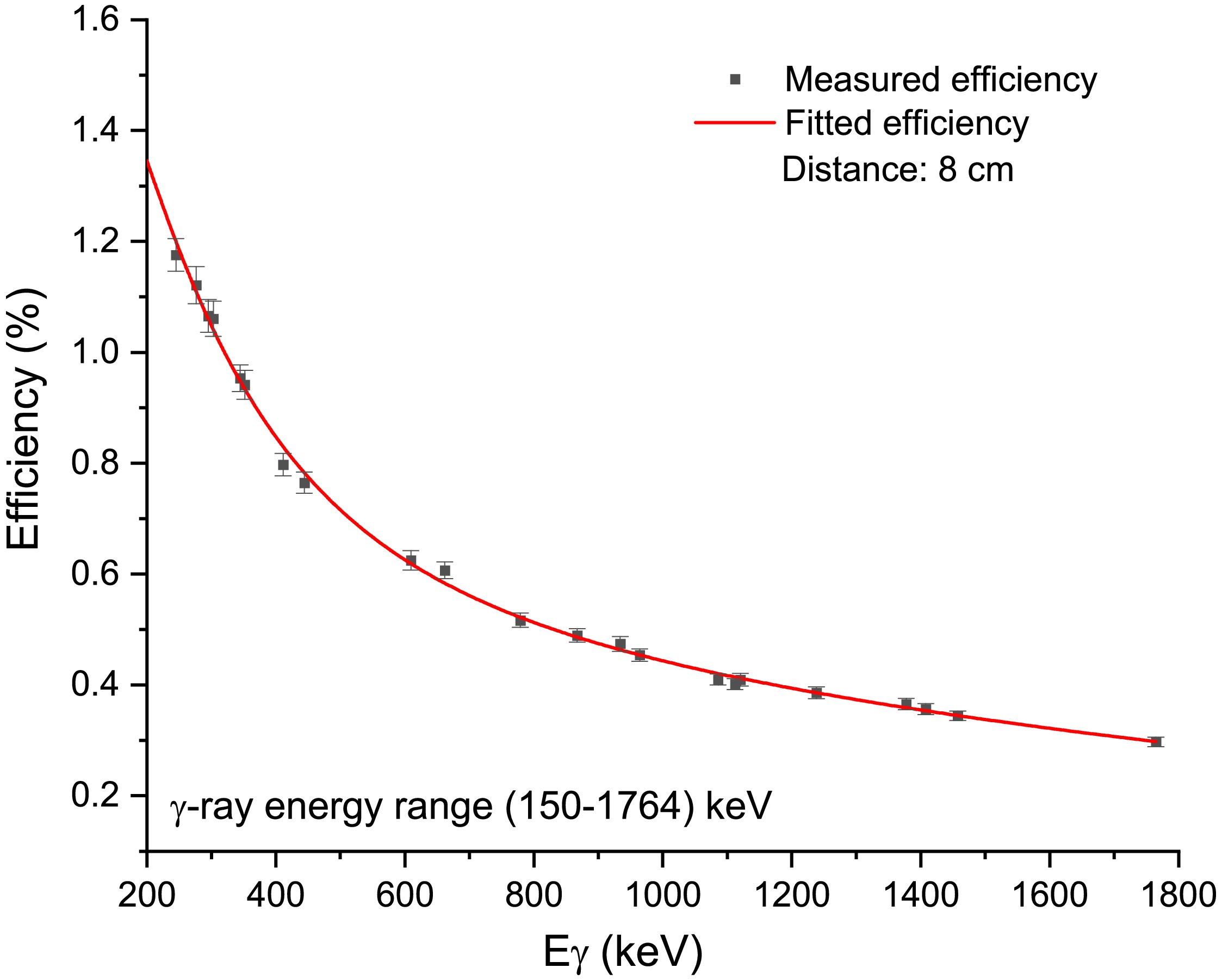
Figure 4.(color online) Standard source calibration point and efficiency fitting curve.
-
After neutron irradiation, the80Kr gas sample was measured multiple times using an HPGe detector (GEM-60P). The Zr, Nb, and Al sheets positioned at the front and back of the sample were measured independently from the gas sample. The HPGe detector has an energy resolution of 1.69 keV for the 1.332 MeV gamma ray of60Co and a relative efficiency of approximately 68%. A typical gamma ray spectrum obtained through the data acquisition system (ORTEC® (GammaVision®)) [35] is shown inFig. 5. This spectrum was measured after a 21.7 h cooling period, with a measurement time of 23.5 min. The main characteristic rays of the sample are labeled in the figure. The blue text marks the line from the container (320.08 keV from54Fe(n,α)51Cr (T1/2= 27.7025 d), 834.48 keV from54Fe(n,p)54Mn (T1/2= 312.20 d), and 846.76 keV from56Fe(n,p)56Mn (T1/2= 2.5789 h)) [31].Table 1provides an overview of the reactions and the radioactive decay properties of the corresponding reaction products.
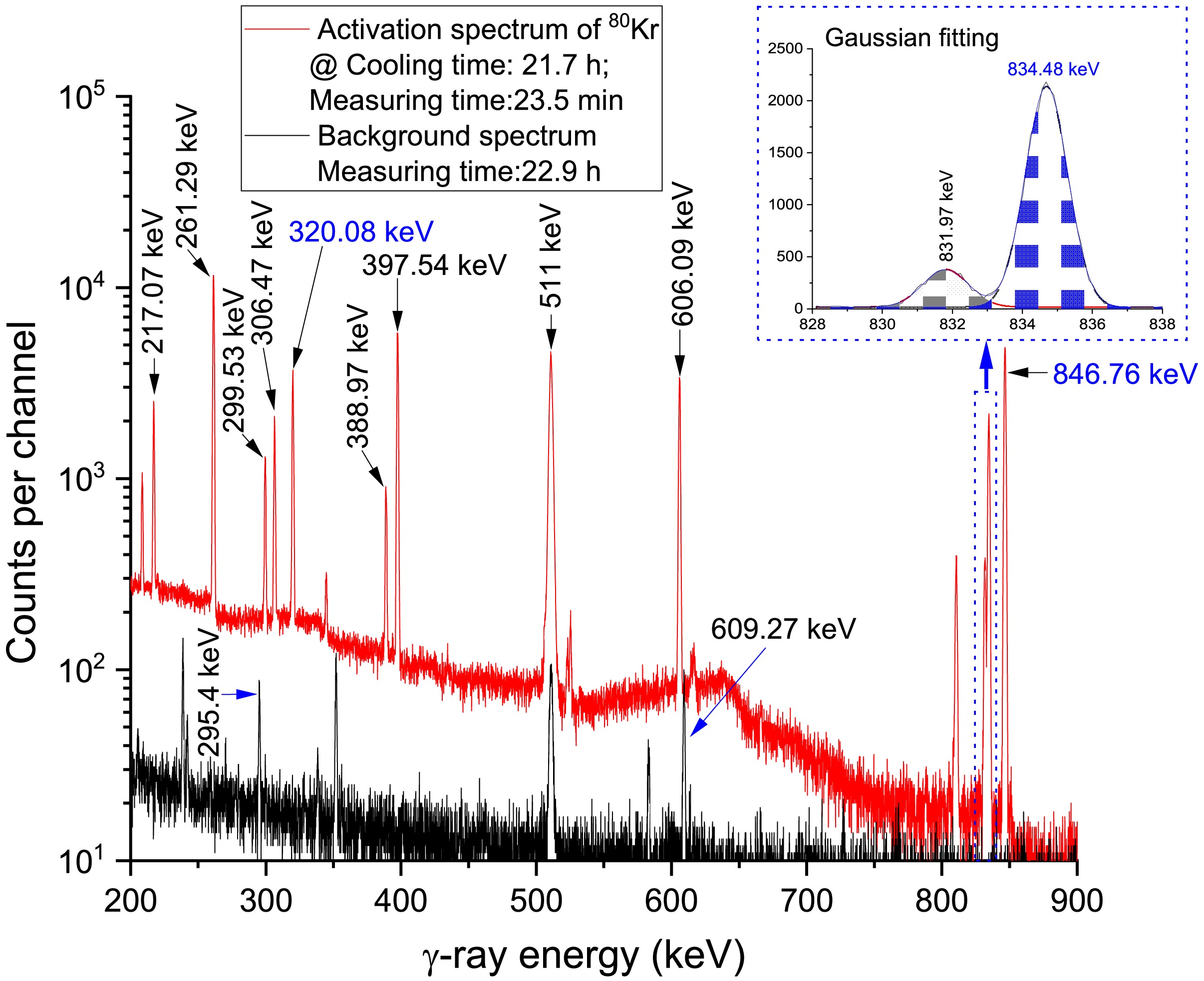
Figure 5.(color online) Gamma ray spectrum of krypton recorded approximately 21.7 h after the completion of irradiation, with a data acquisition duration of approximately 23.5 min.
Reaction Abundance of target isotope (%) Half-life of product E-threshold /MeV Mode of decay /% Eγ /keV Iγ (%) 80Kr(n, 2n)79mKr 99.92880 50 s3 11.799 IT(100) 130.01 100 80Kr(n, 2n)79gKr 99.92880 35.4 d7 11.668 EC(100) 217.07 2.3713 261.29 12.74 299.53 1.549 306.47 2.6013 388.97 1.519 397.54 9.34 606.09 8.13 831.97 1.267 93Nb(n, 2n)92mNb 100 10.15 d2 8.972 EC (100) 934.44 99.154 The black body is used in measurements. The uncertainty of80Kr abundance is estimated based on the product quality report. Table 1.Nuclear reactions measured on krypton and associated decay data (source: [24]).
-
The formula for the activation cross section of80Kr(n, 2n)79Kr, as detailed in our earlier work [36,37], is expressed as follows:
$ {\sigma _x} = \frac{{{{[S\varepsilon {I_\gamma }\eta KMD]}_{Nb}}}}{{{{[S\varepsilon {I_\gamma }\eta KMD]}_x}}} \cdot \frac{{{{[\lambda AFC]}_x}}}{{{{[\lambda AFC]}_{Nb}}}}{\sigma _{Nb}}, $

(1) whereNbandxrepresent the monitor and measured reactions, respectively.Fis the total correction factor for the activity, which is given by
$ F = {f_s} \times {f_c} \times {f_g} \times {f_\Omega }, $

(2) wherefs,fc,fg, andfΩrepresent the correction factors for the self-absorption of the sample at a specific gamma energy, coincidence sum effect of cascade gamma rays within the studied nuclide, geometric configuration between the sample and detector, and solid angle subtended by the sample relative to the neutron source, respectively. The self-absorption of the eight characteristic rays emitted by79Kr in the sample was calculated using the weighted average formula provided earlier in our previous work [36].
$ {f_s} = 6\int_0^1 {\frac{{\mu r(1 - {r^2})}}{{1 - {{\rm e}^{ - 2\mu \sqrt {1 - {r^2}} }}}}} {\rm d}r , $

(3) The mass absorption coefficients (μ/ρ) of krypton and iron were interpolated from the values listed in Reference [38].μis the self-absorption absorption coefficient andρis the density. The coincidence summing correction factors for partial characteristic rays were corrected according to the method outlined in our earlier work [39]. The geometric correction for the sample was calculated using Eq. (4) [36]:
$ {f_g} = 3\int_0^1 \left(1 + \frac{{\sqrt {1 - {r^2}} }}{L} \right)^2 r\sqrt {1 - {r^2}} {\rm d}r = 1 + \frac{3}{{2L}} + \frac{3}{{5{L^2}}} , $

(4) The solid angle correction for the sample relative to the T-Ti target was calculated using Eq. (5) [36]:
$ {f_\Omega } = \frac{{\dfrac{1}{2}({\Omega _1} + {\Omega _3})}}{{{\Omega _2}}}, $

(5) In this experiment, the correction value was 1.0756.
-
The uncertainties of the experimental cross sections corresponding to the eight characteristic rays were analyzed using the square root of the sum of squares method [40,41]. According to Eq. (1), the main experimental quantities contributing to the uncertainties include the monitor reaction (0.55%−0.60%), detection efficiency (2.5%−3.0%), counting statistics (for lines 217.07 keV (1.70%−8.05%), 261.29 keV (0.38%−1.68%), 299.53 keV (2.55%−16.24%), 306.47 keV (1.57%−7.94%), 388.97 keV (2.41%−12.22%), 397.54 keV (0.52%− 2.38%), 606.09 keV (0.58%−4.23%), 831.97 keV (4.24%−10.10%)), relative gamma ray intensity (0.04%−5.96%), half-life (0.20%−1.98%), sample weight (0.1%), timing (<0.1%), self-absorption of gamma ray (~0.5%), and isotopic abundance (0.08%).
-
Through analyzing the eight characteristic gamma rays emitted by the79Kr nucleus, the cross section of the80Kr(n, 2n) reaction can be expressed as follows:σi± Δσi, wherei=1,..., 8. The uncertainties were normalized by taking the reciprocal of the squared uncertainty, and the weighted average cross section was calculated using the following formula [42]:
$ \sigma = \frac{{\displaystyle\sum\limits_{i = 1}^8 {[{\sigma _i}/{{(\Delta {\sigma _i})}^2}]} }}{{\displaystyle\sum\limits_{i = 1}^8 {[1/{{(\Delta {\sigma _i})}^2}]} }}, $

(6) -
The standard deviation of the experimental results was divided into Classes A and B. The experimental standard deviation, ΔσA, was defined as follows [42]:
$ \Delta {\sigma _A} = {\left[ {\frac{{\displaystyle\sum\limits_{i = 1}^n {[{{({\sigma _i} - \sigma )}^2}/{{(\Delta {\sigma _i})}^2}]} }}{{(n - 1)\displaystyle\sum\limits_{i = 1}^n {[1/{{(\Delta {\sigma _i})}^2}]} }}} \right]^{1/2}}, $

(7) A key challenge in experimental science is extracting the maximum information from a limited set of measurements. Specifically, Eq. (7), which calculates error ΔσAof the weighted mean, can yield unphysical results when applied to extremely small sample sizes. To address this problem, we introduce ΔσB, which constrains the influence of individual errors on Δσ[42]:
$ \Delta {\sigma _B} = {\left[ {\sum\limits_{i = 1}^n {\frac{{\text{1}}}{{{{(\Delta {\sigma _i})}^2}}}} } \right]^{ - 1/2}}, $

(8) However, Eq. (8) may also yield inaccurate results when two data points are significantly different but have relatively small error bars. In such cases, standard deviation Δσof weighted averageσcan be calculated for a limited number of measurements using the following formula [42]:
$ \Delta \sigma = \max (\Delta {\sigma _A},\Delta {\sigma _B}), $

(9) In this experiment, the uncertainty in the weighted average cross section ranged from 2.5% to 3.7%. The results are summarized inTable 2.
Reaction Eγ /keV Cross sections (in mb) at various neutron energies (in MeV) 13.59±0.12 13.86±0.15 14.13±0.16 14.70±0.13 14.94±0.02 80Kr(n, 2n)79Kr 217.07 603±46 689±55 815±87 853±63 938±68 261.29 673±37 776±43 813±46 952±52 960±52 299.53 580±51 636±60 661±118 850±68 940±73 306.47 642±46 728±53 802±83 867±61 960±66 388.97 637±56 642±60 780±112 780±64 907±71 397.54 687±43 803±50 849±56 969±60 1071±66 606.09 704±42 859±51 911±65 1017±59 1129±65 831.97 703±72 753±93 676±62 947±92 1122±93 Weighted average ± standard uncertainty 656±16 746±28 804±28 908±28 996±30 93Nb(n, 2n)92mNb [43] 934.44 454.55±2.71 457.99±2.57 459.76±2.51 460.17±2.60 460.28±2.70 Table 2.Cross section values corresponding to different characteristic rays and their weighted average results.
-
Calculations of cross sections based on nuclear models are crucial for evaluating reactor safety, as existing experimental data on the partial nuclear reaction cross sections caused by neutrons are limited or inconsistent [2,44]. Nuclear reaction models are reliable methods for calculating energy and angle distributions, as well as activity yield cross sections, of reaction products [45]. These models account for direct interactions, thermal equilibrium, and precursor processes. Among the input parameters for cross section calculations, the energy level density is the most important [46]. The nuclear level density refers to the number of excited states per energy interval around a given excitation energy,i.e., (dN/dE) per energy interval. In the low-energy region, the excited states are discrete; however, as the excitation energy increases, they transition to a continuous state. Therefore, a nuclear model is required to calculate energy density in the continuous energy region [45]. An accurate and reliable description of the excitation level of the nuclear states in both low- and high-energy regions is necessary to verify the quality of the reaction model used for cross section calculations [47]. The TALYS code (version 1.96) [25] was employed to calculate partial and total cross sections, angle distributions, energy spectra, differential spectra, and recoil. It utilized a combination of microscopic and phenomenological nuclear cascade density models to generate nuclear cross sections. The theoretical excitation function for the80Kr(n, 2n)79Kr reaction was computed across a neutron energy range from the reaction threshold up to 20 MeV using default parameters and adjustments only to the selected level density models. Further details on the cascade density parameters can be found in earlier reports [32].
-
Systematics, in addition to experimental measurements and theoretical calculations, serves as an effective approach for obtaining the cross section value for a certain reaction. The advantage of the systematics method is that it can predict the cross section values of reactions without experimental measurements based on the experimental cross section values of existing reactions. Many researchers [16−23] have used existing experimental data to develop various empirical and semi-empirical (systematic) formulas for calculating the cross section values at different neutron energies (seeTable 3). Additionally, some researchers [1] have employed Bayesian neural network methods to predict the cross section values of (n, 2n) nuclear reactions. They selected three physical quantities, in addition to the proton and neutron numbers of the target nucleus, as the input parameters of the neural network: the incident neutron energy, odd-even effect, and theoretical value of the cross section. The systematic formulas collected indicated that the cross section is a function of the asymmetry parameter [(N-Z)/A], atomic mass numberA, and incident neutron energyEn. The cross section of the reaction can be expressed as follows:
Author Formula,σ/mb Mass region En/MeV Chatterjeeet al. [16] ${\sigma _{n,2n}} = 31.39{({A^{1/3}} + 1)^2}\exp (1.706(N - Z)/A)$ 

45≤A≤238 14.5 Lu and Fink [17] ${\sigma _{n,2n}} = 45.76{({A^{1/3}} + 1)^2}[1 - 7.372\exp ( - 32.21(N - Z)/A)]$ 

28≤Z≤82 14.5 Bychkovet al. [18] ${\sigma _{n,2n}} = 8.7(100 + A)(1 - 0.88\exp ( - 7.95(N - Z)/A))$ 

45≤A≤238 14.5 Konobeyevet al. [19] ${\sigma _{n,2n}} = 53.066{({A^{1/3}} + 1)^2}\left\{ {1 - \dfrac{{43.5Q_{n'}^2 - 2Q_{n'}^3}}{{{A^{1/3}}{S^3}}}} \right\}$ 

40≤A≤209 14.5 $S = - 11.068 + 270.15\left[ {\dfrac{{N - Z + 2.35}}{A}} \right] - 753.93{\left[ {\dfrac{{N - Z + 2.35}}{A}} \right]^2} + {\alpha _5}\frac{1}{{{A^{3/4}}}}$ 

14.5 ${Q_{n'}} = \left\{ {\begin{array}{*{20}{c}} {13.848 - 31.457\left[ {\dfrac{{N - Z - 0.5}}{A}} \right]\begin{array}{*{20}{c}} ,&{for}&{even - N} \end{array}} \\ {9.846 - 19.558\left[ {\dfrac{{N - Z - 0.5}}{A}} \right]\begin{array}{*{20}{c}} ,&{for}&{odd - N} \end{array}} \end{array}} \right.$ 

14.5 For even N, ${\alpha _5} = 65.7$ , for odd N,

${\alpha _5} = 0$ 

14.5 Akash Hinguet al. [20] ${\sigma _{n,2n}} = 1.344{({A^{1/3}} + 1)^2}\exp (40.53(N - Z)/A - 116.5{(N - Z)^2}/{A^2})$ 

48≤A≤238 (even -A) 14.5 ${\sigma _{n,2n}} = 4.39{({A^{1/3}} + 1)^2}\exp (27.77(N - Z)/A - 82.26{(N - Z)^2}/{A^2})$ 

45≤A≤209 (odd -A) 14.5 Gehan Y. Mohamedet al. [21] ${\sigma _{n,2n}} = {A^{\tfrac{1}{3}}}(a + c{x^2} + e{x^4} + g{x^6} + i{x^8})/(1 + b{x^2} + d{x^4} + f{x^6} + h{x^8})$ 

$x = \exp [ - ((N - Z)/A)]$ 

13 ${\sigma _{n,2n}} = {A^{\tfrac{1}{3}}}(a + c{x^2} + e{x^4} + g{x^6} + i{x^8} + k{x^{10}})/(1 + b{x^2} + d{x^4} + f{x^6} + h{x^8} + j{x^{10}})$ 

14 ${\sigma _{n,2n}} = {A^{\tfrac{1}{3}}}(a + cx + e{x^2} + g{x^3})/(1 + bx + d{x^2} + f{x^3})$ 

15 Habbaniet al. [22] ${\sigma _{n,2n}} = 23.53{({A^{1/3}} + 1)^2}\exp (3.50(N - Z)/A)$ 

45≤A≤209 (odd -A) 14.5 ${\sigma _{n,2n}} = 20.82{({A^{1/3}} + 1)^2}\exp (3.76(N - Z + 1)/A)$ 

48≤A≤238 (even -A) 14.5 Luoet al. [23] ${\sigma _{n,2n}} = 0.0226{(1 + {A^{1/3}})^2}\exp (133.86(N - Z)/A - 779.47{(N - Z)^2}/{A^2} + 1500.51{(N - Z)^3}/{A^3})$ 

23≤A≤209 14.5 Table 3.Comparison of (n, 2n) reaction cross section systematics.
$ {\sigma _{n,2n}} = f[{E_n},{A^{1/3}},(N - Z)/A], $

(10) The existing systematic formulas typically rely on statistical models designed for specific neutron energies, such as 14.5 MeV. The formation cross section in these formulas depends on mass number A of the target nucleus, whereas theQ-value effect is related to the number of protons and neutrons in the target nucleus.
-
In this study, eight gamma rays with energies of 217.07 keV (Iγ=2.37%), 261.29 keV (Iγ=12.7%), 299.53 keV (Iγ=1.54%), 306.47 keV (Iγ=2.60%), 388.97 keV (Iγ=1.51%), 397.54 keV (Iγ=9.3%), 606.09 keV (Iγ= 8.1%), and 831.97 keV (Iγ=1.26%) emitted in the decay of79Kr were used to measure the cross section of the80Kr(n, 2n)79Kr reaction (Eth=11.668 MeV). The93Nb(n, 2n)92mNb reaction (Eth=8.972 MeV) was selected as the standard reaction to monitor the neutron flux. In previous measurements [14], the characteristic ray at 398 keV, along with the27Al(n,α)24Na (Eth=3.249 MeV) and56Fe(n,p)56Mn (Eth=2.966 MeV) monitor reactions, were used to determine the80Kr(n, 2n)79Kr cross section. At a neutron energy of 14.4±0.3 MeV, the measured result was (810±60) mb, with an uncertainty of 7.4%. In the present study, we applied a weighted average method, which resulted in an uncertainty of less than 3.7% for the80Kr(n, 2n)79Kr cross section. The measured cross sections and systematic calculation results are given inTable 4. The final correlation matrix for the80Kr(n, 2n)79Kr reaction cross section is presented inTable 5. All experimental data, TALYS-1.96 theoretical calculation results, and systematic results are presented inFig. 6. Additionally, the experimental results and evaluation curves of databases ENDF/B-VIII.0 [26] (BROND-3.1 [27]), JEFF- 3.3 [28], JENDL-5 [29], and TENDL-2023 [30] are shown inFig. 7. To compare the experimental results with the theoretical (evaluated) values, we calculated the
${\chi ^2} = \dfrac{1}{N}\sum\limits_{i = 1}^N [(\sigma _i^{\rm calc} - \sigma _i^{\exp })/ (k\Delta \sigma _i^{\exp })]^2$ values [32]. The results are provided inTables 6and7.Figure 6clearly shows that, in the energy range of 13−15 MeV, our experimental results are consistent with the systematic results of Lu and Fink [17], Bychkovet al. [18], and Habbaniet al. [22], as well as the TALYS-1.96 theoretical results using ldmodel 5 within the uncertainty range (seeTable 6). However, our results are higher than the calculations of TALYS-1.96 corresponding to ldmodels 3, 4, and 6. In particular, the theoretical results of ldmodel 3 have a significant deviation from those of the other ldmodels. This indicates that the generalized superfluid model (ldmodel 3) is insufficient to accurately describe the reaction80Kr(n, 2n)79Kr.Fig. 7shows that our measurement results in the neutron energy range of 13−14.7 MeV are also consistent with the evaluation curves of ENDF/B-VIII.0 and BROND-3.1 (seeTable 7). However, at the energy point of 14.94±0.02 MeV, our results are slightly higher than the evaluation curves [26−30]. At 14.4±0.3 MeV, our results agree only with the values in Reference [14]. At 14.5 MeV, the systematic results are distributed between 680 and 1149 mb. Note that three systematic formulas in Reference [21] provide calculations at 13, 14, and 15 MeV, yielding values of 535, 155, and 1,2081 mb, respectively. The results at the energy points of 14 and 15 MeV exhibit significant anomalies. The possible reason is that the empirical formula provided in Reference [21] contains inaccuracies, as it fails to reproduce their own results. The data point 1,2081 mb was excluded fromFigs. 6and7owing to its significantly larger magnitude than the other values.Refs. En/MeV Cross sections /mb Present experimental results 13.59±0.12 656±16 13.86±0.15 746±28 14.13±0.16 804±28 14.70±0.13 908±28 14.94±0.02 996±30 Kondaiahet al. [14] 14.4±0.3 810±60 Systematic result Chatterjeeet al. [16] 14.5 1049 Lu and Fink [17] 14.5 910 Bychkovet al. [18] 14.5 944 Konobeyevet al. [19] 14.5 1149 Akash Hinguet al. [20] 14.5 680 Gehan Y. Mohamedet al. [21] 13
14
15535
155
12081Habbaniet al. [22] 14.5 896 Luoet al. [23] 14.5 766 Table 4.Measured cross sections and systematic results of the80Kr(n, 2n)79Kr reaction at corresponding neutron energies.
Neutron
energy
En/MeVCross
section
σx/mbΔσx
(%)Correlation matrix 13.59±0.12 656±16 2.5 1.0000 13.86±0.15 746±28 3.7 0.3912 1.0000 14.13±0.16 804±28 3.5 0.4815 0.4751 1.0000 14.70±0.13 908±28 3.1 0.3916 0.3847 0.4714 1.0000 14.94±0.02 996±30 3.1 0.3967 0.3896 0.4770 0.3907 1.0000 Table 5.Results of the80Kr(n, 2n)79Kr reaction, encompassing experimental cross sections, overall uncertainties, and correlation matrices.
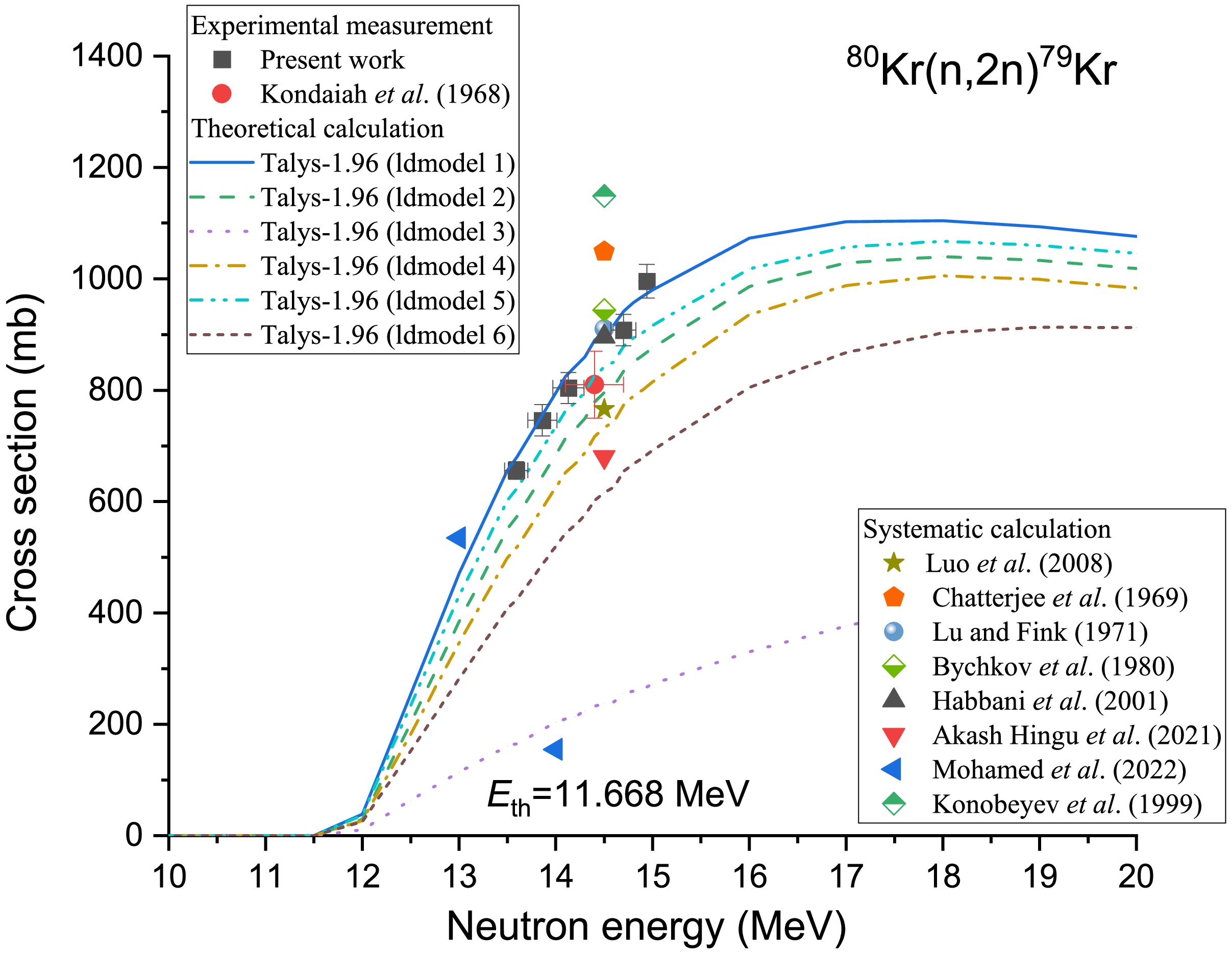
Figure 6.(color online) Theoretical excitation function of80Kr(n, 2n)79Kr reaction, experimental data, and systematic results.

Figure 7.(color online) Experimental values and evaluation curves of80Kr(n, 2n)79Kr reaction.
Reaction χ2(k=2, P=95%) ldmodel
1ldmodel
2ldmodel
3ldmodel
4ldmodel
5ldmodel
680Kr(n, 2n)79Kr 0.984 3.769 146.031 9.940 0.963 28.567 The minimum value in each row is indicated in bold. Table 6.Comparison between the current measured cross section and the TALYS-1.96 theoretical value corresponding for each level density model (covering factork=2, confidence P=95%).
Reaction χ2(k=2,P=95%) ENDF/B-VIII.0 JEFF-3.3 JENDL-5 TENDL-2023 80Kr(n, 2n)79Kr 1.342 3.453 1.397 11.854 The minimum value in each row is indicated in bold. Table 7.Comparison between the cross section measured and evaluation value (covering factork=2, confidenceP=95%). ENDF/B-VIII.0 is the same as BROND-3.1.
-
The activation cross sections for the80Kr(n, 2n)79Kr reaction were measured at neutron energies of 13.59±0.12, 13.86±0.15, 14.13±0.16, 14.70±0.13, and 14.94±0.02 MeV using updated decay data. The activity of the generated nuclei was assessed by analyzing eight characteristic gamma rays emitted by79Kr. The precision of the measurement was significantly improved through the application of a weighted averaging method. Compared with previous studies, the current cross section data covered a broader energy range and exhibited lower uncertainties. The theoretical cross sections for the80Kr(n, 2n)79Kr reaction were computed using the TALYS-1.96 code with various level density models. Our experimental results were compared with earlier experimental values, theoretical predictions from different models, evaluated curves, and results derived from systematic formulas. The nuclear model calculations using the TALYS code indicated that the microscopic level densities (Skyrme force) composed from Hilaire’s combinatorial tables [48] (ldmodel 5) were the most suitable for describing the cross section of the80Kr(n, 2n)79Kr reaction. The data obtained in this study are crucial for improving nuclear data libraries, validating nuclear reaction models, and supporting practical applications. Moreover, the high-precision cross section data provide strong support for parameter fitting in systematic formulas for (n, 2n) reactions and training neural networks.
Determination of cross sections for the80Kr(n, 2n)79Kr reaction in the neutron energy range of 13−15 MeV
- Received Date:2025-03-11
- Available Online:2025-08-15
Abstract:In this study, neutron activation experiments were performed to measure the (n, 2n) reaction cross section for80Kr at five neutron energies, 13.59±0.12, 13.86±0.15, 14.13±0.16, 14.70±0.13, and 14.94±0.02 MeV, using a highly enriched gaseous sample. The neutron energies and their uncertainties were determined using theQ-value equation for the3H(d,n)4He reaction, accounting for the solid angle of the sample. The93Nb(n, 2n)92mNb reaction was employed to monitor the neutron flux. Eight characteristic gamma rays of the produced nucleus were selected to determine the activity of the generated nuclei. The final cross sections were obtained using a weighted average method. The self-absorption and cascade of rays, as well as the geometry and solid angles of the sample, were corrected. The80Kr(n, 2n)79Kr reaction cross sections obtained in this work exhibited the smallest uncertainty than the values in existing literature, which provided improved experimental constraints for the prediction of excitation curves, thereby enhancing the quality of the corresponding database. The measured results were compared with previously reported experimental values, empirical and systematic formula predictions, theoretical calculations from TALYS-1.96 with six adjustable energy level densities, and evaluated database results. Our experimental results demonstrated high precision and extended the energy range appropriately, offering valuable insights for future studies.


 DownLoad: